How to Clean a Wooden Salad Bowl Safely
You should wash your wooden salad bowl right after use with warm water, a little mild dish soap, and a soft sponge; don’t soak or use the dishwasher. Rinse well, wipe dry inside and out, then air‑dry upside down. Every few weeks rub in food‑safe mineral oil or a beeswax blend to seal and prevent cracking. For odors or stains, use baking soda, coarse salt with lemon, or diluted vinegar. Keep going to learn simple fixes and care tips.
Quick Everyday Cleaning: 3 Simple Steps for Wooden Bowls
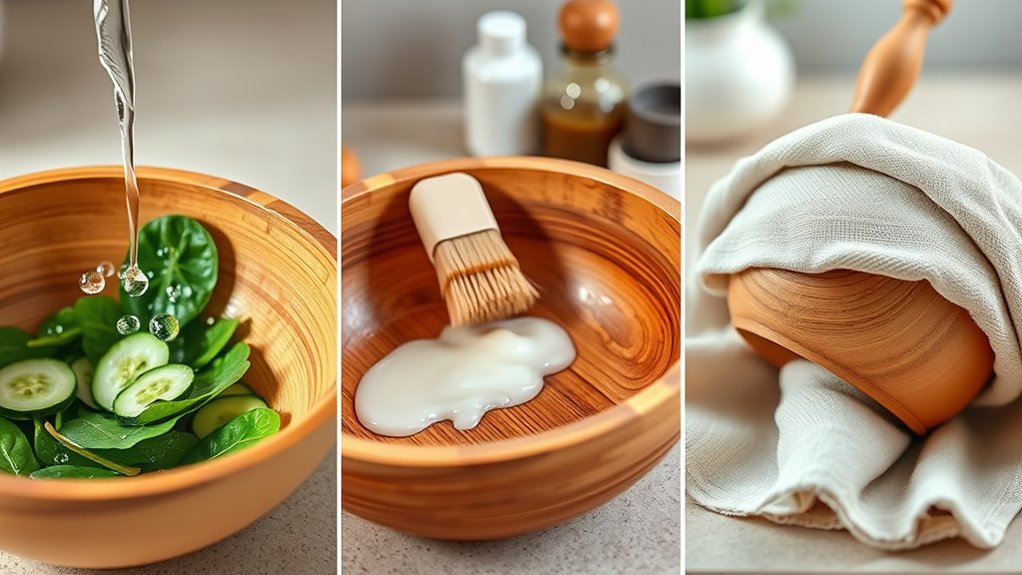
When you’re done with a salad, don’t let bits and dressing sit—wash your wooden bowl promptly with warm water, a mild dish soap, and a soft sponge. Avoid soaking it or using the dishwasher.
Rinse thoroughly, turning the bowl to remove soap residue. Dry immediately with a clean towel, wiping both inside and out to prevent water absorption.
Let it air for a few minutes in a well-ventilated spot, bowl upside down to release trapped moisture.
Store in a cool, dry place away from direct heat or sunlight. Repeat after each use to keep the bowl sanitary and long-lasting.
Cleaning Checklist: Tools and Food‑Safe Supplies
Before you start cleaning, gather the right tools: a soft sponge or cloth, mild dish soap, a soft brush for crevices, and a towel for drying.
You’ll also want food‑safe finishing supplies like mineral oil or a dedicated cutting board conditioner to maintain the wood.
Keep everything handy so you can clean and treat the bowl efficiently after each use.
Essential Cleaning Tools
What do you need to have on hand to keep a wooden salad bowl clean and food‑safe? Gather a soft dish brush or nonabrasive sponge, mild dish soap, and a flexible silicone spatula for scraping.
Keep a clean microfiber or lint-free towel for drying and a breathable rack or tray to air dry.
Have coarse kosher salt handy for gentle scrubbing and odor removal. Use a small bowl for diluted vinegar when deodorizing.
Keep disposable gloves if you prefer. Store supplies nearby but dry.
Avoid abrasive pads or harsh chemicals—those can damage the wood and compromise food safety.
Food‑Safe Finishing Supplies
Ready to give your wooden salad bowl a safe, lasting finish? Choose food-safe oils like mineral oil, fractionated coconut oil, or walnut oil if no nut allergies exist. Avoid vegetable oils that go rancid.
For deeper protection, use a beeswax-and-oil blend or a commercial butcher block conditioner labeled food-safe. Apply with a lint-free cloth, rub into grain, let soak, then wipe excess.
Reapply periodically, especially after washing. Keep supplies clean and stored dry.
Don’t use varnishes, shellac, or polyurethane that aren’t food-grade. These finishes protect wood without adding harmful chemicals to your salad.
Remove Leftover Greens and Dressing Safely
Start by scraping leftover greens and dressing gently with a spoon to avoid scratching the wood.
Then wash the bowl with a soft cloth or sponge and a small amount of mild dish soap.
Rinse well and dry completely with a clean towel to prevent moisture damage.
Scrape Gently With Spoon
Before you rinse, use a spoon to lift away leftover greens and dressing—working gently prevents gouges and keeps the bowl’s finish intact. You’ll want to avoid scraping hard or using metal tools that can nick the wood.
Scoop toward the center, catching soft bits without grinding them into the grain. If dressing clings, let it soften briefly so the spoon glides easily.
Finish removing debris before any wet cleaning to reduce stains and odors.
- Use a wooden or plastic spoon.
- Angle the spoon shallowly.
- Scoop, don’t scrape harshly.
- Discard scraps promptly.
Use Mild Dish Soap
Once you’ve removed loose bits with your spoon, wash the bowl with a mild dish soap and warm water to lift oils and dressing without stripping the finish. Use a soft cloth or sponge, working gently in the grain’s direction to avoid abrasion. Don’t soak the bowl; brief washing prevents swelling. Rinse promptly and wipe excess moisture (don’t let it air-sit). If stubborn oil remains, repeat with a bit more soap rather than harsher cleaners. Maintain the finish by conditioning occasionally with food-safe oil after cleaning.
| Step | Action | Tip |
|---|---|---|
| 1 | Apply soap | Mild only |
| 2 | Wipe | With grain |
| 3 | Rinse | Promptly |
| 4 | Dry wipe | No soaking |
Rinse And Dry Thoroughly
If you rinse the bowl right after washing, you’ll remove leftover greens and dressing that can trap moisture and odors. Rinse with warm water, tipping the bowl to flush crevices, and avoid soaking which can warp the wood.
Wipe with a clean dish towel, then air-dry upside down to let steam escape. Don’t put the bowl in a damp cabinet; store it where air circulates.
- Use warm running water, not hot.
- Pat dry immediately with a soft towel.
- Air-dry upside down on a rack.
- Store in a dry, ventilated spot.
Hand‑Wash Method for Wooden Salad Bowls
When you wash a wooden salad bowl by hand, use warm water, a mild dish soap, and gentle motions to remove food without soaking the wood. Scrape leftover bits first, then wipe with a soft sponge, working the grain. Rinse quickly, keeping water exposure brief. For stubborn residue, sprinkle coarse salt and rub with a lemon half to lift oils and odors. Avoid abrasive pads or dishwashers. After cleaning, buff with a clean cloth to remove excess moisture and restore sheen. Maintain periodically with food‑safe oil to protect the wood.
| Step | Action | Tip |
|---|---|---|
| 1 | Scrape | Use a rubber spatula |
| 2 | Clean | Mild soap, soft sponge |
| 3 | Deodorize | Salt + lemon half |
Dry a Wooden Bowl Without Warping
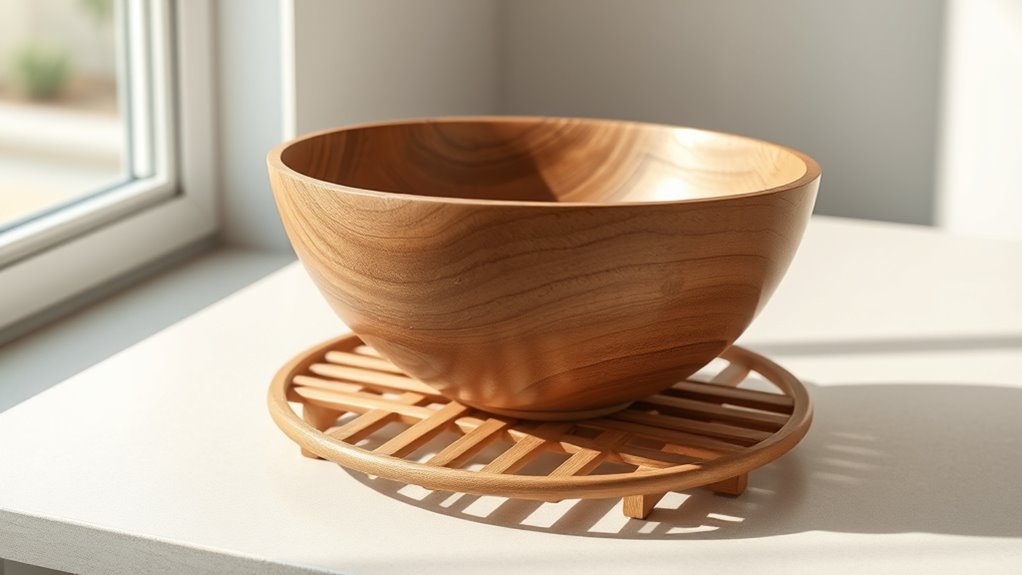
Because wood can warp as it dries, you should remove moisture quickly but gently. After washing, wipe the bowl with a clean, dry microfiber or cotton cloth, turning it to reach the interior and rim.
Air-dry upright where airflow is steady and temperature is moderate; avoid direct sunlight or heat sources.
Once mostly dry, apply a thin coat of food-safe oil to restore moisture and prevent cracking.
- Pat dry with a soft cloth.
- Let air circulate around the bowl.
- Keep away from heaters and windows.
- Oil lightly when fully dry.
Why You Should Never Use the Dishwasher
Although dishwashers seem convenient, they can quickly ruin a wooden salad bowl by exposing it to high heat, extended moisture, and harsh detergents that strip oils and cause cracking, warping, and surface damage.
You should hand-wash with mild soap and lukewarm water, rinsing promptly to avoid saturation. Don’t soak the bowl or leave it in a wet sink; instead, wipe and dry immediately with a clean towel, then air-dry upright.
Dishwasher cycles and drying elements accelerate splitting and fade finishes. If your bowl’s finish looks dull or dry, restore it with food-safe oil rather than risking machine cleaning.
Deodorize a Wooden Bowl Naturally
How do you get rid of lingering food odors in a wooden salad bowl without harsh chemicals? You’ll freshen it using simple pantry items and gentle techniques that won’t harm the wood. Rub lemon or baking soda, let them sit briefly, then rinse and dry thoroughly. Repeat if needed, then condition the wood to restore its barrier.
Freshen a wooden salad bowl naturally: rub with lemon or baking soda, rinse, dry, and oil.
- Sprinkle baking soda, rub with damp cloth, rinse.
- Wipe with half a lemon, let sit 5–10 minutes, rinse.
- Air dry upside down to prevent moisture trap.
- Rub a thin coat of food-grade mineral oil after drying.
Remove Vinaigrette and Oil Stains From Wooden Bowls
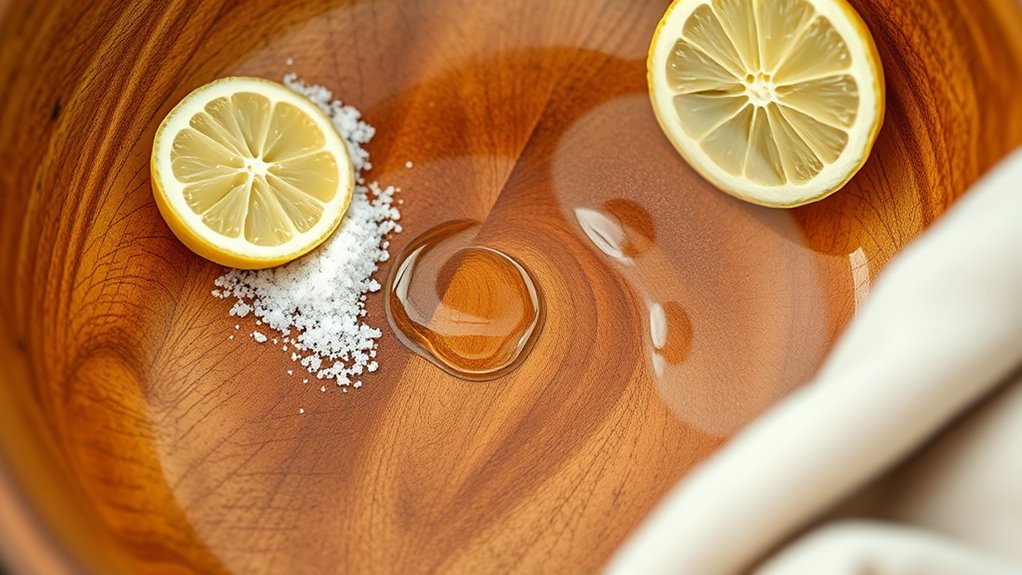
When oil or vinaigrette soaks into the grain, you can lift the stain without damaging the wood by using absorbent powders and gentle scrubbing.
Sprinkle baking soda or cornstarch over the spot, press lightly so it contacts the oil, and let it sit for 15–30 minutes to draw moisture out.
Brush away the powder, then mix warm water with a few drops of mild dish soap.
Dampen a soft cloth, wipe the area in the grain’s direction, and avoid soaking the bowl.
Rinse the cloth, repeat if needed, then dry thoroughly and recondition the wood with a thin coat of oil.
Lift Stubborn Stains: Safe Spot‑Cleaning Tips
When a stain won’t come out with regular washing, try gentle abrasive methods like baking soda paste to lift surface marks without sanding away finish.
For oily spots, apply an oil-based treatment (like mineral oil with a little salt) to coax grease out before wiping it clean.
To prevent future trouble, treat fresh spills right away and recondition the wood regularly so stains don’t set.
Gentle Abrasive Methods
Although you want to protect the bowl’s finish, you can still tackle stubborn spots using mild abrasives that won’t scratch or strip the wood. Use gentle, controlled motions and test a hidden area first. Avoid harsh powders or metal scouring pads.
- Baking soda paste: mix with water, rub lightly with a soft cloth, rinse quickly.
- Fine salt: sprinkle on a lemon half, rub the spot, wipe clean.
- Soft-bristled brush: loosen debris in grain without sanding.
- Microfiber cloth and warm water: repeat short passes, drying thoroughly afterward.
Finish by drying and airing the bowl.
Oil-Based Spot Treatments
If gentle abrasives don’t lift a stain, oil-based spot treatments can often break down oily or set-in marks without harming the finish.
Dab a small amount of food-safe oil (like mineral or light olive) onto a cotton swab, apply to the stain, and let it sit 10–20 minutes.
Gently rub along the grain with a soft cloth; you’ll loosen residue without sanding.
Wipe away excess oil, then clean the area with mild soap and water, drying promptly.
Test first in an inconspicuous spot.
Repeat once if needed, then reapply finish oil to restore protection.
Preventative Stain Removal
Want to stop stains before they set into your wooden salad bowl? Act fast: blot spills immediately with a soft cloth, rinse briefly with cool water, then dry.
For lingering spots, try gentle, food-safe options that won’t strip finish.
- Baking soda paste: mix with water, apply briefly, wipe away.
- White vinegar spray: dilute 1:4, mist, then wipe and dry.
- Lemon and salt: rub cut lemon over salt-dusted stain, rinse, dry.
- Mineral oil after cleaning: condition wood to repel future stains.
Test any method on an inconspicuous area first.
When and How to Deep‑Clean a Wooden Bowl
When regular washing doesn’t remove stains, odors, or sticky residue, it’s time to deep‑clean your wooden salad bowl. You’ll dry it, then apply a gentle, food‑safe cleaner: dilute white vinegar (1:4) or a few drops of mild dish soap in warm water.
Use a soft cloth to wipe the interior and exterior, avoiding prolonged soaking. Rinse quickly with warm water and pat dry with a towel.
Let the bowl air‑dry upright in a well‑ventilated spot. Once fully dry, condition the wood with a thin coat of food‑grade mineral oil to restore moisture and protect the surface.
Scrub Stains and Odors With Salt and Lemon
Sprinkle coarse salt over the stained area and rub it with a halved lemon to use the salt’s abrasion and the lemon’s natural oils for deodorizing.
Work in small circles until the stain fades, then wipe away residue with a damp cloth.
Rinse the bowl lightly, dry it thoroughly, and let it air-dry upside down to prevent moisture from lingering.
Salt Abrasion Technique
If your wooden salad bowl has stubborn stains or lingering odors, you can scrub them away using coarse salt and a halved lemon. The salt provides gentle abrasion while the lemon lifts stains and neutralizes smells.
Sprinkle a generous layer of coarse salt over the stained area.
Press the cut lemon half into the salt and rub in circular motions, applying moderate pressure without soaking the wood.
Rinse quickly with warm water and dry immediately with a clean towel.
Repeat for deep stains, then condition with a light oil once fully dry.
- Prep bowl
- Add salt
- Scrub with lemon
- Rinse and dry
Lemon Deodorizing Action
You’ve already used salt’s abrasive action; now put the lemon to work for deodorizing and brightening the wood. Cut a lemon in half, squeeze lightly to release juice, then rub the flesh across stained or odorous areas. The citric acid neutralizes lingering smells and lifts mild discoloration without harsh chemicals.
For stubborn spots, sprinkle a little salt on the lemon half and scrub gently; the salt aids abrasion while the juice penetrates. Let the lemon juice sit briefly to work, then wipe away residue with a damp cloth.
Repeat if needed, but don’t over-bleach delicate grain.
Rinse And Dry Thoroughly
Want to make sure no soap, salt, or lemon residue lingers? Rinse the bowl under warm running water, rubbing gently to remove grit and citrus. Pat dry with a clean towel, then let it air-dry upside down to prevent moisture traps. Don’t soak the wood.
- Rinse thoroughly until water runs clear.
- Wipe with a lint-free towel to remove surface moisture.
- Air-dry in a well-ventilated spot, upside down.
- Check for residual scent or salt; repeat light rinse if needed.
Once dry, condition the wood if it looks dull or feels rough.
Safe Commercial Cleaners for Wooden Bowls
While household remedies work well, choosing a commercial cleaner designed for unfinished or finished wood gives you consistent, safe results. Look for food-safe, non-toxic labels and ones formulated for cutting boards or wooden kitchenware.
You’ll want mild surfactants, no bleach, and pH-neutral formulas that won’t strip oils or finishes. Test on a small hidden area first to confirm compatibility.
Apply sparingly, following manufacturer instructions, then rinse and dry promptly.
For finished bowls, choose products that preserve sealants; for unfinished wood, pick cleaners that clean without drying.
Store cleaners safely and replace them if their scent or texture changes.
Cleaners and Techniques to Avoid
Because harsh chemicals and abrasive tools can damage wood, don’t reach for bleach, ammonia, or oven cleaners when treating your salad bowl. You should also avoid soaking wood, using metal scrubbers, or leaving strong scented detergents on the surface. These practices strip finish, warp grain, and invite cracks.
- Steel wool or metal pads — they scratch and remove finish.
- Harsh degreasers or concentrated detergents — they strip oils and leave residues.
- Prolonged soaking — it swells fibers and weakens joints.
- High-heat dishwasher cycles — they dry and crack the bowl.
Sanitize a Wooden Bowl Without Bleach
You can sanitize a wooden bowl effectively without bleach by rinsing it with a solution of equal parts vinegar and water to kill bacteria.
For tougher spots, scrub with coarse salt and a halved lemon to lift stains and deodorize.
Finish by rubbing a food-safe oil into the wood to seal and protect the surface.
Vinegar And Water Rinse
If you want a simple, food-safe way to sanitize a wooden salad bowl without bleach, mix equal parts white vinegar and water and use it as a rinse. Pour or spritz the solution over the bowl, scrub gently with a soft cloth or sponge, then let it sit for a few minutes to loosen residues and reduce microbes.
Rinse thoroughly with warm water and dry immediately with a clean towel to prevent warping or odor. Repeat as needed after use.
- Use plain white vinegar.
- Keep a 1:1 ratio.
- Don’t soak the bowl.
- Dry immediately.
Salt And Lemon Scrub
While a vinegar rinse works well for routine sanitizing, a salt-and-lemon scrub gives you a natural abrasive that lifts stains and the lemon’s acidity helps kill bacteria.
Sprinkle coarse salt over the bowl’s surface, then halve a lemon and rub it firmly in circular motions. The salt exfoliates trapped food particles; the lemon releases juice that deodorizes and sanitizes.
Rinse with warm water and dry immediately with a clean towel to prevent warping. For stubborn spots, let the lemon juice sit on the salt for a minute before scrubbing.
Repeat monthly or as needed, avoiding soaking or harsh chemicals.
Food-Safe Oil Finish
Because wooden bowls are porous, sealing them with a food-safe oil finish both protects the wood and helps keep bacteria out without using bleach. You’ll want to use food-grade mineral oil, fractionated coconut oil, or a certified butcher block oil.
Apply generously, let the oil penetrate for several hours, then wipe off excess.
- Sand any rough spots with fine grit before oiling.
- Warm the oil slightly for better absorption.
- Rub oil into the grain with a clean cloth, repeating until wood stops soaking it up.
- Reapply monthly or after heavy washing to maintain the barrier.
How Often to Recondition: Oiling & Waxing Schedule
When you use your wooden salad bowl regularly, plan to oil it every 1–3 months and wax it about twice a year to keep the wood hydrated and protected.
Check the surface monthly: if water beads fail or the wood looks dry or dull, oil sooner. After heavy use or washing, wait until the bowl is fully dry before reconditioning.
Check your bowl monthly — if water no longer beads or it looks dull, oil it once fully dry.
Apply oil in thin coats, let it soak, then wipe excess; for wax, buff lightly to seal.
Seasonal changes and climate affect frequency—dry winter air may need more attention. Keep a simple schedule and inspect rather than guessing.
Best Food‑Safe Oils and Finishes to Use
For routine reconditioning, you’ll usually reach for food‑grade mineral oil because it soaks in without going rancid and keeps the wood hydrated.
You can also use beeswax blends for a slightly water‑resistant, polished finish—just rub them on, let them set, and buff.
For longer‑lasting protection consider food‑safe finishing oils (like fractionated coconut or tung blends) and choose products labeled explicitly for cutting boards or salad bowls.
Mineral Oil And Usage
To keep a wooden salad bowl conditioned and water-resistant, use food‑grade mineral oil—it’s odorless, tasteless, inexpensive, and won’t go rancid like some vegetable oils.
You’ll apply it to clean, dry wood to replenish oils lost from washing and prevent cracking or staining. Rub a generous coat, let it soak several hours or overnight, then wipe off excess.
Repeat monthly or whenever wood looks dry.
- Use only food‑grade mineral oil.
- Warm the oil slightly for better absorption.
- Apply with a soft cloth, following the grain.
- Don’t overoil; remove any sticky residue.
Beeswax Blends Explained
Although mineral oil does a fine job on its own, adding a beeswax blend gives your wooden salad bowl a bit more protection and a pleasant, subtle sheen.
You’ll mix melted beeswax with food‑safe oil (like mineral oil) to create a paste that seals pores, repels moisture, and reduces staining.
Apply sparingly, rub in with a soft cloth, let it penetrate, then buff off excess so the finish isn’t sticky.
Reapply only when dry spots appear or after deep cleaning.
Store the blend in a sealed container; warm before use if it hardens.
It’s easy, safe, and practical.
Food‑Safe Finishing Oils
When you want lasting protection without risking food safety, choose finishing oils and waxes that are explicitly labeled food‑safe. These penetrate wood, seal pores, and restore luster without off‑gassing harmful compounds.
You’ll pick an oil based on durability, drying time, and maintenance. Apply thin coats, wipe off excess, and cure fully before use.
- Mineral oil — non‑drying, food‑safe, easy to reapply; ideal for first coats.
- Walnut oil — natural and attractive, but avoid if guests have nut allergies.
- Tung oil (pure) — durable, water‑resistant finish when fully cured.
- Beeswax blend — adds surface sheen and easy spot repairs.
How to Apply Oil or Wax to Restore the Wood
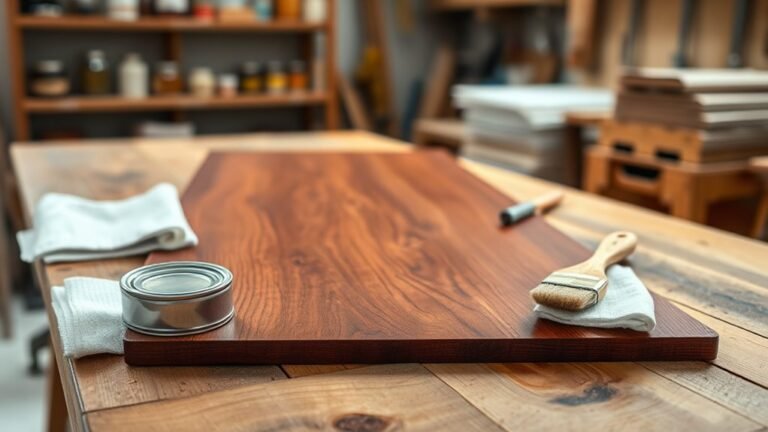
Before you oil or wax the bowl, make sure it’s completely dry and free of dust or food residue so the finish soaks in evenly.
Choose a food‑safe oil (like mineral, walnut, or tung) or a beeswax blend.
Apply a thin coat with a soft cloth, rubbing with the grain until the wood looks saturated, not greasy.
Let it absorb for 15–30 minutes, then wipe off excess.
For wax, warm it slightly, rub on, let set, then buff to a sheen.
Repeat oiling monthly or when wood looks dry; wax every few months for extra protection and sheen.
Repair Small Cracks, Splits, and Surface Scratches
Once your bowl’s finish is healthy from oiling or waxing, inspect it closely for small cracks, splits, or surface scratches so you can address damage before it worsens. You’ll clean the area, sand lightly with fine-grit paper, and decide whether filler or glue is needed.
Use food-safe wood glue for splits, clamp briefly, then sand smooth. For shallow scratches, rub with matching wax or a paste of oil and fine sawdust. Finish with a thin coat of food-safe oil.
- Clean the damaged area
- Sand gently with 220–320 grit
- Fill or glue when necessary
- Refinish with food-safe oil
Daily Habits to Prevent Stains and Odors
If you keep a few simple habits—like rinsing and drying the bowl promptly after use and avoiding prolonged contact with strongly colored or acidic foods—you’ll prevent most stains and lingering odors.
Wipe immediately with a soft cloth, then air-dry upright so moisture escapes. Use mild dish soap sparingly for greasy residues, rinsing thoroughly.
Rotate oils: every few weeks rub food-safe oil lightly to maintain the finish that resists absorption.
Don’t leave dressings, citrus, or beets sitting in the bowl.
For quick refreshes, sprinkle coarse salt and rub with a lemon half, then rinse and dry.
Stay consistent to keep the bowl fresh.
Store Wooden Bowls to Prevent Mold and Smell
When you store wooden bowls properly, you’ll keep moisture and odors from taking hold. After washing and fully drying, place bowls in a cool, dry spot with good air circulation. Don’t stack damp bowls; that traps humidity. Use breathable covers like cotton cloths instead of plastic.
Occasionally check for musty smells and re-oil if wood seems dry.
- Store bowls upside down to let air escape.
- Keep them away from heat sources that warp wood.
- Avoid airtight containers that trap moisture.
- Rotate bowls periodically to inspect and air them out.
Choose Maintenance‑Friendly Wooden Bowls
Choosing maintenance-friendly wooden bowls makes cleaning and care much easier, so pick pieces that fit your routine and kitchen habits. Opt for smooth finishes, tight joints, and nonporous woods like maple or beech. Choose sealed or oil-finished surfaces you can refresh, avoid cracked or glued seams, and prefer single-piece bowls over laminated ones if you want simplicity. Consider size and weight for easy rinsing and drying. Keep care instructions simple so you’ll follow them.
| Feature | Benefit | Tip |
|---|---|---|
| Wood type | Low porosity | Maple/beech |
| Finish | Easy wipe | Food-safe oil |
| Construction | Durable | Single-piece |
| Size | Manageable | One-hand rinse |
Troubleshoot Common Problems and When to Replace
Because wooden bowls live with food and moisture, you’ll occasionally run into stains, lingering odors, cracks, or surface wear—and you can often fix these issues without tossing the bowl.
Spot-clean stains with baking soda paste; rinse and dry thoroughly.
Spot-clean stains using a baking soda paste, then rinse and dry thoroughly to protect the wood.
For odors, rub with coarse salt and a lemon half, then rinse.
Sand shallow scratches lightly, then re-oil.
Deep cracks that trap food or split through the wood mean it’s time to replace.
- Stains: baking soda paste
- Odors: salt + lemon
- Scratches: sand + oil
- Cracks: replace immediately
Frequently Asked Questions
Can I Use a Wooden Salad Bowl With Hot Soups or Stews?
Yes—you can use a wooden salad bowl for hot soups or stews occasionally, but don’t pour boiling liquids regularly. Hot liquids can warp or crack the wood and strip finishes, so let it cool a bit first.
Will Wooden Bowls Absorb Flavors From Strongly Scented Foods?
Yes, wooden bowls can absorb strong scents over time, especially untreated or porous wood; you’ll notice lingering flavors after acidic or aromatic foods, so season, clean promptly, and occasionally deodorize with baking soda or lemon.
Are Wooden Bowls Safe for Serving Acidic Fruits Like Citrus?
Yes — you can serve citrus in wooden bowls, but don’t leave acidic fruits sitting long. Acid can dull finish or slightly stain over time. Wipe promptly, dry thoroughly, and re-oil occasionally to maintain the wood’s protection.
Can I Microwave a Wooden Salad Bowl to Warm Food Briefly?
No, you shouldn’t microwave a wooden salad bowl to warm food briefly; it can crack, warp, dry out or even spark if metal is present. Instead, you can transfer food to a microwave‑safe dish to heat safely.
Do Wooden Bowls Leach Any Chemicals Into Food?
No, wooden bowls don’t typically leach harmful chemicals into food; you’ll only get natural wood compounds and any residues from finishes. If your bowl’s sealed with food-safe oil or FDA-approved finish, you’re safe for regular use.
Conclusion
You’ve got this—cleaning a wooden salad bowl is quick and gentle. Rinse away scraps, hand-wash with mild soap, rinse, and dry thoroughly to avoid warping. Wipe with a food-safe oil now and then to keep wood from drying and cracking. Store the bowl in a dry, ventilated spot. With these small habits—prompt rinsing, no soaking, and regular oiling—your bowl will stay beautiful, odor-free, and safe for salads for years.