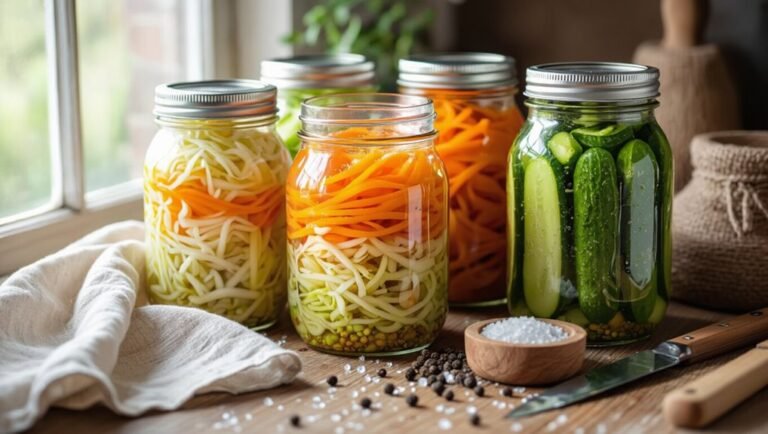
Is Sauerkraut a Fermented Food? Exploring Its Probiotic Benefits and More
You probably know sauerkraut as tangy shredded cabbage, but it is much more: it is made by fermenting cabbage with lactic acid bacteria, which preserves it and creates live microbes that can benefit your gut. If you want to understand how those probiotics work, which versions actually help, and how to add sauerkraut to meals without ruining its benefits, keep going. There is useful nuance to how it is made and eaten.
What is Sauerkraut?
Sauerkraut is shredded cabbage that has been salted and left to ferment, transforming sweet cabbage into tangy, probiotic-rich food.
It has roots in Central and Eastern Europe, where people preserved cabbage for winter using this simple method.
In practice, one packs cabbage and salt into a jar or crock and allows naturally occurring lactic acid bacteria to do the work.
Definition of Sauerkraut
A tangy, crunchy cabbage dish, sauerkraut is made by fermenting finely shredded cabbage with salt until beneficial lactic acid bacteria transform its sugars into acids and preserve the vegetable.
The result is a sour, savory condiment or side that has been enjoyed for centuries. When you ask if sauerkraut is a fermented food, the answer is yes; fermentation defines it.
You’ll recognize raw cabbage turned softer, tangier, and more digestible as lacto-fermented. Commercially canned versions may be pasteurized, reducing live microbes, while traditional, unpasteurized sauerkraut retains probiotics, enzymes, and the characteristic acidic flavor profile.
History and Origin of Sauerkraut
Having established that fermentation defines the dish, let’s look at where it came from and how it spread.
You’ll find sauerkraut’s roots in ancient China, where salted cabbage traveled with traders and sailors.
By medieval times, European cultures embraced it as a durable, vitamin-rich winter food. Germanic regions refined techniques and popularized the name “sauerkraut,” though similar preparations existed across Eastern Europe.
Naval use helped prevent scurvy, boosting its global reach. As migrants moved, they carried recipes and variations.
Today you encounter regional twists, but the core—salted, fermented cabbage—remains a shared culinary legacy.
How Sauerkraut is Made
When you shred cabbage, salt it, and pack it tightly into a jar or crock, you set the stage for a natural fermentation that transforms crunchy leaves into tangy sauerkraut.
You press the cabbage to release brine, keeping solids submerged to prevent mold. Wild lactic acid bacteria on the cabbage multiply, consuming sugars and producing lactic acid that preserves flavor and texture.
Room-temperature fermentation lasts from days to weeks; cooler storage slows it. You can add caraway, juniper, or beet for variation.
Once acidity suits your taste, refrigerate to slow fermentation and enjoy a probiotic-rich, shelf-stable condiment.
Is Sauerkraut a Fermented Food?
You’re about to see how fermentation turns cabbage into sauerkraut through a simple, controlled microbial process.
You’ll learn why sauerkraut is classified as a fermented food and how lactic acid bacteria drive the flavor, texture, and preservation.
Keep an eye on the role of those bacteria; without them, you wouldn’t have sauerkraut as you know it.
Understanding the Process of Fermentation
Although it appears simple, sauerkraut is actually a product of controlled fermentation. Shredded cabbage and salt create an environment where beneficial lactic acid bacteria thrive, converting sugars into acids that preserve the vegetable and give it its tangy flavor.
You’ll create anaerobic conditions by packing cabbage tightly and covering it with brine so spoilage microbes can’t grow. Over days to weeks, successive bacterial species dominate, lowering pH and developing aroma, texture, and nutrients.
Temperature influences speed and flavor; cooler temperatures slow fermentation, while warmer temperatures speed it. You can monitor smell, taste, and firmness to judge when it’s ready for refrigeration.
How Sauerkraut Fits into Fermentation
Because it is made by salt-driven, oxygen-free bacterial activity, sauerkraut is definitively a fermented food. Lactic acid bacteria convert cabbage sugars into acids and other compounds, preserving the vegetable and producing its characteristic tang, texture, and enhanced nutrient profile. You will see fermentation’s hallmarks: preservation without cooking, changed flavor, and increased bioavailability of some nutrients. That allows you to use sauerkraut as a long-lasting, flavorful ingredient or condiment. The table below highlights practical contrasts to help you appreciate how it fits into broader fermentation traditions.
| Feature | Benefit | How you use it |
|---|---|---|
| Preservation | Longer shelf life | Condiment |
| Flavor | Tangy depth | Cooking |
| Nutrition | Enhanced nutrients | Side dish |
| Texture | Crunchy | Topping |
| Convenience | Ready-to-eat | Meal boost |
The Role of Lactic Acid Bacteria in Sauerkraut
Having seen how fermentation preserves cabbage and boosts flavor, let’s look at the microbes that make it happen: lactic acid bacteria (LAB).
You’ll rely on species such as Leuconostoc, Lactobacillus, and Pediococcus to convert sugars into lactic acid, lowering pH and creating the tangy taste. LAB also produce antimicrobial compounds that inhibit pathogens, improving safety and shelf life.
Their activity depends on salt, temperature, and oxygen levels that you control during fermentation.
When you choose raw, unpasteurized sauerkraut, you’re getting live LAB that can support gut microbial diversity and contribute to probiotic effects.
Is Sauerkraut a Probiotic Food?
You probably know that probiotics are live microbes that can help your gut, but it’s worth clarifying what that means for foods.
During the fermentation of sauerkraut, naturally occurring lactic acid bacteria can multiply and turn the cabbage into a probiotic-rich food if it’s unpasteurized.
This article will look at the specific health benefits these microbes may offer and whether the sauerkraut you buy is truly a useful source of probiotics.
What Are Probiotics?
Probiotics are live microorganisms that, when consumed in adequate amounts, can help balance the bacteria in your gut and support digestion and immune function.
You’ll find probiotics in certain foods and supplements; common strains include Lactobacillus and Bifidobacterium. They compete with harmful microbes, produce helpful metabolites, and interact with your immune cells to reduce inflammation.
Benefits can include improved bowel regularity, reduced bloating, and support during antibiotic use, though effects vary by strain and dose.
You should choose probiotic sources backed by research, consider storage and viability, and consult a healthcare provider for specific health concerns.
How Sauerkraut Becomes Probiotic During Fermentation
If probiotics help balance your gut, it’s natural to ask how a food like sauerkraut can actually contain them.
You make sauerkraut by salting cabbage, which draws out juices and creates an oxygen-free environment where lactic acid bacteria thrive. As fermentation proceeds, those bacteria multiply and produce acids that preserve the vegetable and populate it with live cultures.
To see this process, note the following:
- Salt-tolerant lactic acid bacteria colonize the brine quickly.
- Anaerobic conditions favor beneficial strains over spoilage microbes.
- Acidification stabilizes the community, preserving live probiotics for consumption.
Choose raw, unpasteurized sauerkraut to retain those microbes.
The Health Benefits of Probiotic Foods
Because sauerkraut can deliver live, beneficial microbes when it is raw and unpasteurized, it is worth looking at what those microbes do for your health. They can support digestion, help balance gut flora, and may ease occasional bloating. You might notice improved bowel regularity and better nutrient absorption. Some strains can modulate immune responses and reduce inflammation markers. Effects vary by individual and product, so pay attention to how you feel. Below is a quick snapshot:
| Benefit | Potential effect |
|---|---|
| Digestion | Enhances breakdown of food |
| Gut balance | Outcompetes harmful microbes |
| Immunity | Supports immune signaling |
| Inflammation | May lower markers |
Is Sauerkraut Considered a Source of Probiotics?
You have just seen how raw, unpasteurized sauerkraut can supply live microbes that influence digestion and immunity, so let’s ask whether it actually counts as a probiotic food.
You should know probiotics are defined as live microorganisms that confer health benefits when consumed in adequate amounts.
Raw sauerkraut often contains beneficial lactic acid bacteria, but not all batches reach probiotic thresholds.
To decide if yours qualifies, consider the following:
- Preparation: Raw, naturally fermented sauerkraut preserves live cultures.
- Storage: Refrigeration and avoiding pasteurization maintain viability.
- Quantity: Effective servings must deliver sufficient colony-forming units.
Health Benefits of Eating Sauerkraut
Sauerkraut can support digestive health and a balanced gut microbiome thanks to live cultures and fiber.
It may also help boost immune function, support weight management, and offer benefits for heart health through nutrients such as potassium and potential cholesterol effects.
Let’s look at the evidence and practical tips for obtaining these benefits.
Digestive Health and Gut Microbiome
When you add sauerkraut to your meals, you aren’t just getting a crunchy, tangy topping; you’re introducing live, beneficial bacteria that help balance your gut microbiome.
These microbes aid digestion, help break down fiber, and can reduce bloating when you consume them regularly. You’ll often notice smoother digestion and more regular bowel movements as your microbial diversity improves.
Pair sauerkraut with a varied diet for optimal results.
Key digestive effects include:
- Enhanced breakdown of complex carbohydrates and fiber
- Increased production of short-chain fatty acids that nourish colon cells
- Support for microbial diversity linked to digestive resilience
Boosting Immune System Function
A healthier gut microbiome from regular sauerkraut consumption doesn’t just ease digestion. It also strengthens your immune defenses.
When you eat sauerkraut, beneficial bacteria help balance gut flora, supporting gut-associated lymphoid tissue that coordinates immune responses. Those microbes can enhance barrier function, reduce inflammation, and stimulate production of antibodies and immune cells.
Fermentation also preserves vitamins such as C and K, which support immune health. Integrating modest portions of raw, unpasteurized sauerkraut into meals provides ongoing microbial exposure and micronutrient support, helping your body respond more effectively to pathogens while maintaining immune system balance.
Potential for Weight Management
Because sauerkraut is low in calories but high in fiber and probiotics, it can help you feel fuller on fewer calories and support healthier eating patterns.
You can add small portions to meals to boost satiety without many extra calories. Probiotics may influence gut bacteria linked to metabolism, though effects vary by person.
Combine sauerkraut with balanced meals and watch portion sizes for best results.
- Eat a few tablespoons with protein to slow digestion.
- Use it as a vegetable substitute to reduce calorie-dense condiments.
- Track how your appetite and weight respond over weeks.
Sauerkraut and Heart Health
Several studies suggest that sauerkraut can support heart health, largely through its fiber, potassium, and probiotic content.
You can lower cholesterol and blood pressure by adding sauerkraut to your diet. Fiber binds bile acids, helping to remove LDL, while potassium helps to balance sodium and relax blood vessels.
Probiotics may reduce inflammation and improve lipid metabolism, though effects vary by strain and preparation. Choose unpasteurized sauerkraut to get live cultures, and watch sodium; rinse or eat smaller portions if you need to limit salt.
Pair sauerkraut with whole grains, lean proteins, and vegetables for a heart-friendly meal.
Sauerkraut vs. Other Probiotic Foods
Now let’s compare sauerkraut to other fermented foods so you can see where it stands.
You’ll learn how its probiotic strains and counts stack up against kimchi and why some fermented foods don’t provide live probiotics.
This will help you choose the best options for your gut health.
How Does Sauerkraut Compare to Other Fermented Foods?
While sauerkraut shares the core trait of live, beneficial bacteria with other fermented foods, it stands out in flavor profile, fermentation process, and nutrient composition.
You’ll notice sauerkraut’s tangy, cabbage-forward taste differs from milder kefir or miso, and its raw versions retain more live cultures than pasteurized condiments.
When comparing, consider texture, salt level, and culinary use; each affects probiotic viability and enjoyment.
Quick reference:
- Fermentation method: lacto-fermentation versus cultures in yogurt or alcohol-based pickles
- Nutrients: vitamins K and C, fiber-rich cabbage
- Use: condiment, side, or ingredient enhancing meals and gut diversity
Sauerkraut vs. Kimchi: A Comparison of Probiotic Content
How do sauerkraut and kimchi compare in terms of probiotics?
You’ll find that both provide beneficial lactic acid bacteria, but their profiles differ. Sauerkraut typically offers strains such as Lactobacillus plantarum and L. brevis; kimchi includes those plus Leuconostoc mesenteroides and often more diverse species due to varied ingredients and spices.
Fermentation time, salt, and temperature influence counts and diversity, so homemade batches can surpass commercial jars. If you desire a broader microbial mix, kimchi often excels; if you prefer milder flavors with reliable strains, sauerkraut’s consistent fermentation is appealing.
Including both may provide varied probiotic exposure.
The Difference Between Probiotic and Non-Probiotic Fermented Foods
What makes a fermented food “probiotic” versus simply fermented? You judge by living strains, dosage, and evidence.
Fermented foods such as traditional raw sauerkraut often contain live lactobacilli, while others are pasteurized or contain inactive microbes. You should look for labels, storage, and preparation.
Consider these quick distinctions:
- Live cultures present: raw, unpasteurized ferments versus heat-treated products.
- Proven strain benefits: researched probiotic species and colony counts.
- Consumption context: regular servings deliver benefits; occasional intake may not.
Choose products that list live strains and store them cold to guarantee you obtain probiotic effects.
How to Incorporate Sauerkraut into Your Diet
You can enjoy sauerkraut straight from the jar or mix it into salads, sandwiches, and cooked dishes for a tangy probiotic boost.
Try simple starter recipes such as sauerkraut-topped baked potatoes, quick slaws, or scrambled eggs to get comfortable with its flavor.
When buying, look for unpasteurized jars and keep them refrigerated to preserve probiotics and freshness.
Best Ways to Enjoy Sauerkraut
Try adding sauerkraut to one or two meals a day to enjoy its tang and probiotics without overpowering flavors.
You can mix small amounts into familiar dishes so you can receive benefits without drastic changes. Start modestly, taste as you go, and balance textures.
- Top sandwiches or wraps for crunch and acid that brightens rich fillings.
- Stir into grain bowls or salads to add depth and probiotic value.
- Serve alongside roasted or grilled proteins to cut fat and refresh the palate.
Keep portions moderate, store properly, and choose raw, unpasteurized sauerkraut when you want live cultures.
Sauerkraut Recipes for Beginners
If you’re new to sauerkraut, start simple and work it into meals you already enjoy so the tang and texture feel natural rather than overwhelming.
Try a classic Reuben-style sandwich: rye, Swiss, corned beef or pastrami, and sauerkraut warmed together. Add a spoonful to grilled sausages or burgers for bright contrast.
Fold into potato or egg salads to replace mayo-heavy dressing with lively acidity. Stir into grain bowls or warm quinoa with roasted vegetables for instant flavor lift.
Top tacos or avocado toast with a little sauerkraut for crunch. Taste as you go and adjust amounts to suit you.
Tips for Buying and Storing Sauerkraut
Once you have become comfortable adding sauerkraut to sandwiches and salads, learn how to buy and store it so it keeps tasting its best.
When shopping, choose raw, refrigerated jars for live probiotics; shelf-stable pasteurized cans lack cultures. Check ingredient lists for just cabbage, salt, and possibly caraway; avoid added sugars or preservatives.
At home, transfer opened sauerkraut to a clean jar if needed, submerge it in its brine, and seal it tightly. Keep it refrigerated and use it within several months for peak flavor.
If fermentation continues, burps or tang may increase; taste before serving.
- Choose refrigerated, raw jars
- Keep submerged in brine
- Use within months
Common Myths About Sauerkraut
You might’ve heard that sauerkraut is a probiotic powerhouse, but there are important nuances about which strains survive and how much you need.
It’s also not universally too sour. Preparation and serving methods can tame the tang for most palates.
Next, we’ll clear up how much sauerkraut people typically need to eat to obtain meaningful probiotic benefits.
Sauerkraut and Its Probiotic Content: Debunking Misconceptions
- Look for the terms “raw,” “unpasteurized,” or “refrigerated” to find live cultures.
- Expect varying strains and counts; sauerkraut isn’t a standardized supplement.
- Home-fermented batches often have more diverse microbes than commercial ones.
You will benefit most by choosing fresh, unheated sauerkraut and storing it properly to retain probiotics.
Is Sauerkraut Too Sour for Everyone?
Wondering whether sauerkraut’s tang will be too intense for you? You might find its sourness varies by batch, fermentation length, and salt levels, so one jar won’t define your experience.
If you’re sensitive to acidity, try small amounts with milder foods; mixing sauerkraut into sandwiches, salads, or cooked dishes tames sharpness. Rinsing briefly reduces tang but also lowers probiotic counts.
Sweet or lightly fermented varieties exist if you prefer gentler flavors. Your palate can adapt; gradual exposure often increases tolerance.
Ultimately, sauerkraut isn’t universally overpowering; adjustments allow you to enjoy its flavor and benefits without discomfort.
How Much Sauerkraut Should You Eat for Probiotic Benefits?
How much sauerkraut should you eat to gain probiotic benefits? You don’t need large servings; a few tablespoons daily can assist in introducing live cultures without upsetting your gut.
Start small, especially if you’re new to fermented foods, and adjust based on tolerance and effects.
Begin with 1 to 3 tablespoons per day. Increase gradually to about 1/4 cup if tolerated. Prefer unpasteurized sauerkraut with visible brine for active probiotics.
Remember that variety matters: pair sauerkraut with other fermented foods and a fiber-rich diet to support those microbes.
Stop or reduce intake if you experience persistent discomfort.
Conclusion
You have learned that sauerkraut’s fermentation turns cabbage into a tangy, probiotic-rich food that can boost gut health, digestion, and nutrient absorption. Choose raw, unpasteurized versions to obtain live cultures, and balance servings with a varied diet to support microbial diversity. Try sauerkraut alongside proteins, salads, or sandwiches, but steer clear if you have specific health restrictions. Embrace it as one of many fermented options to enrich flavor and well-being.