Understanding the Alcohol Content in Kombucha: What You Need to Know
If you drink or make kombucha, you should know how much alcohol might be in it and why that matters. The usual store-bought bottles stay under legal non-alcoholic limits, but homebrews and certain commercial varieties can have more. Temperature, sugar, and fermentation time all affect alcohol levels, and the consequences go beyond taste. Therefore, continue reading to learn what to watch for and how to estimate it.
What Is Kombucha and How Is It Made?
Kombucha is a lightly effervescent tea drink that one makes by fermenting sweetened tea with a SCOBY, which stands for symbiotic culture of bacteria and yeast.
During fermentation, the yeast converts sugar into alcohol and carbon dioxide, while bacteria turn some alcohol into acids, which affects the final alcohol level.
Typical ingredients include tea, sugar, water, and the SCOBY.
Small changes in those ingredients or fermentation time will change how much alcohol ends up in the bottle.
Overview of Kombucha
A fizzy, slightly tangy tea, kombucha is a fermented drink made by sweetening brewed tea and allowing a symbiotic culture of bacteria and yeast, known as SCOBY, to consume the sugar.
This process produces organic acids, carbon dioxide, and a small amount of alcohol. You’ll find bottles at stores and homemade batches in kitchens; kombucha offers probiotic potential, varied flavors, and light effervescence.
You might wonder if kombucha can make you drunk. Under normal commercial production, it will not, although higher-alcohol variants do exist.
Consider these quick points to understand what you’re drinking:
- Flavor range includes fruity, floral, or vinegary options
- Commercial versus home alcohol levels
- Health claims versus evidence
The Fermentation Process of Kombucha
If you want to understand why kombucha tastes fizzy and slightly tangy, you should look at its fermentation process.
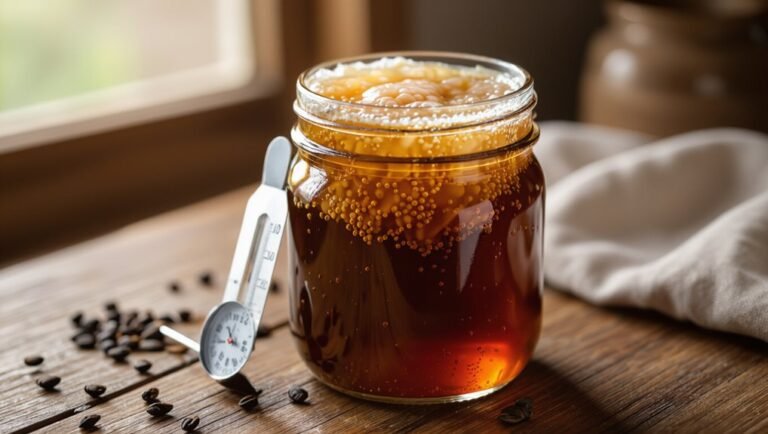
Sweetened tea is inoculated with a SCOBY, which is a living colony of yeast and bacteria. This colony consumes sugars and produces acids, carbon dioxide, and small amounts of alcohol.
You must monitor temperature and time to steer activity; warmer and longer fermentation yields more acid and alcohol, while cooler or shorter fermentations preserve sweetness and reduce alcohol content.
Yeast converts sugars to ethanol and carbon dioxide, while bacteria oxidize ethanol to acetic and other organic acids, thereby lowering pH.
After primary fermentation, you can bottle for carbonation or stop fermentation to control alcohol levels.
Ingredients in Kombucha
Sweetened tea, a SCOBY (symbiotic culture of bacteria and yeast), and time form the core of kombucha, and each ingredient plays a specific role.
The tea provides nitrogen and flavor compounds, sugar feeds the microbes, and the SCOBY converts sugar into acids, gas, and small amounts of alcohol.
You’ll also use starter liquid to guarantee acidity and control microbial balance.
Herbs, fruit, or juice add flavor and extra sugars during secondary fermentation, which can raise alcohol slightly.
Sanitation and temperature influence outcomes, so monitor fermentation to manage sweetness, acidity, carbonation, and alcohol.
Tea type affects nutrients and taste.
Sugar amount controls fermentation rate.
Add-ins change flavor and alcohol potential.
How Much Alcohol Is Naturally Found in Kombucha?
When you check kombucha labels, store-bought varieties are usually tested to stay under 0.5% ABV, but some brands can be higher.
If you make kombucha at home, alcohol can rise above that level depending on fermentation time and sugar.
Temperature, yeast strains, and how you bottle it are the main factors that affect final alcohol content.
Alcohol Content in Store-Bought Kombucha
Curious about the amount of alcohol present in the kombucha you purchase at the store?
You’ll usually find commercial bottles labeled “non-alcoholic” containing up to 0.5% ABV, which keeps them below legal limits for alcoholic beverages.
Some brands sell higher ABV varieties (1% to 7% or more) clearly labeled as alcoholic.
Factors such as pasteurization, filtration, and CO2 control help manufacturers limit alcohol content.
When shopping, read labels and check serving sizes; unopened shelf-stable kombucha tends to maintain low alcohol levels, while refrigerated, live products can gradually increase in alcohol over time.
- Look for “<0.5% ABV” on the label
- Check storage and best-by dates
- Prefer pasteurized options for stability
Alcohol Content in Homemade Kombucha
Although homemade kombucha is primarily a fermented tea meant to be lightly effervescent, it will almost always contain some alcohol because yeast converts sugar into ethanol during fermentation. You will typically find 0.5 to 2 percent ABV in short brews and up to 3 percent or more if fermentation continues. You can taste mild boozy notes, and children or alcohol-sensitive individuals may react. Labeling will not help at home, so measure if needed. Store refrigerated to slow alcohol rise. Below is a simple reference table showing typical ranges and serving notes.
| Brew stage | Typical ABV | Serving note |
|---|---|---|
| Early (3 to 7 days) | 0.5 to 1 percent | Very light |
| Mid (7 to 14 days) | 1 to 2 percent | Mildly boozy |
| Longer (14 days and more) | 2 to 3 percent or more | Noticeable |
Fermentation Factors Affecting Alcohol Levels
Because yeast and bacteria are working together, several controllable factors determine how much alcohol ends up in your kombucha. You can influence alcohol by adjusting sugar, fermentation time, and temperature.
More sugar, longer time, or warmer conditions allow yeast to produce more ethanol before bacteria convert some to acids. You’ll also affect flavor and acidity as alcohol levels shift. Monitor with a hydrometer or pH strips, taste frequently, and stop fermentation when you reach your target.
Small batches and consistent conditions provide predictable results.
- Sugar concentration and tea strength
- Fermentation duration and temperature
- SCOBY health and oxygen exposure
Can Kombucha Get You Drunk?
You probably won’t get drunk from a single bottle of commercial kombucha, but if you drink many bottles your blood alcohol can rise.
How much it takes depends on the drink’s ABV, your body size, metabolism, and whether you have eaten.
Below we’ll look at how many bottles could matter and what factors influence kombucha’s alcohol level.
How Much Kombucha Would It Take to Feel Drunk?
How much kombucha would it take to feel drunk? You’d need to weigh the drink’s alcohol by volume, your body weight, metabolism, and whether the kombucha is commercially labeled or homebrewed.
Most commercial bottles sit under 0.5% alcohol by volume, so they’d have a negligible effect, while stronger homebrews can reach 1 to 3% or more. You’d have to drink large volumes quickly to raise blood alcohol noticeably.
Consider these factors:
- Alcohol by volume of the specific batch and serving size
- Your body weight, sex, and drinking pace
- Food in your stomach and personal tolerance
How Many Bottles of Kombucha Does It Take to Get Drunk?
Curious whether kombucha can actually make you drunk? If you drink commercial kombucha labeled under 0.5% ABV, you’d need an impractically large number of bottles to reach legal intoxication, often dozens, because each bottle contains only trace alcohol.
Homebrewed or unfiltered varieties can be higher, so fewer bottles might produce noticeable effects, but typical store-bought brands will not.
Also consider bottle size and your body weight, tolerance, and how quickly you drink.
In short, standard commercial kombucha is unlikely to get you drunk in reasonable amounts; getting intoxicated would require consuming far more than you’d normally tolerate.
Factors That Influence the Alcohol Level in Kombucha
Because fermentation is a living and variable process, several controllable and uncontrollable factors determine how much alcohol ends up in a kombucha bottle.
You can influence alcohol by adjusting fermentation time, temperature, and sugar, but wild yeasts, SCOBY composition, and oxygen exposure also matter. Shorter and cooler ferments lower alcohol, while longer and warmer ones raise it.
Flavoring and secondary fermentation can boost alcohol as yeast feast on added sugars. If you’re sensitive to or avoiding alcohol, monitor gravity, store kombucha cold, and select commercial labels tested for less than 0.5% ABV.
- Fermentation time and temperature
- Sugar content and added fruit
- SCOBY strains and contamination
Is Kombucha Considered an Alcoholic Beverage?
Whether kombucha is treated as an alcoholic beverage depends on local laws and the drink’s measured alcohol level.
Rules vary by country and sometimes by state, with thresholds often tied to the percentage of alcohol by volume.
Knowing how much alcohol your kombucha contains helps you determine if it legally counts as an alcoholic beverage.
Legal Classification of Kombucha in Different Countries
How do regulators decide whether kombucha is an alcoholic beverage? You’ll find that rules vary. Some countries use a 0.5% ABV cutoff, while others set different thresholds or consider the production method, labeling, and targeted market.
You’ll need to know local limits before selling, transporting, or gifting kombucha.
- United States: federal 0.5% ABV guideline, with state-specific enforcement and licensing.
- European Union: member states differ; some treat it under food law, while others apply beverage alcohol rules.
- Australia/New Zealand: specific limits and labeling requirements; commercial producers must comply.
Check national guidance and test results to remain compliant.
How Alcohol in Kombucha Affects Its Classification
When kombucha contains alcohol at or above a jurisdiction’s legal threshold, regulators usually treat it as an alcoholic beverage and apply licensing, taxation, labeling, and age-restriction rules accordingly.
You’ll need to follow those rules if your product exceeds limits: secure permits, pay applicable taxes, and display alcohol content on labels.
Retailers must check age and storage restrictions, and distributors may face different compliance requirements.
Even small variations in measured alcohol can change classification, so you should monitor fermentation closely and document testing.
If you sell across borders, verify each jurisdiction’s thresholds to avoid penalties and guarantee accurate consumer information.
Is Kombucha an Alcoholic Drink by Definition?
Regulators treat kombucha as an alcoholic beverage once it meets legal alcohol thresholds. However, whether it’s considered “alcoholic” by definition depends on context, which includes legal, scientific, and consumer perceptions.
It’s important to know that low-alcohol kombucha often contains under 0.5% ABV and is classified as nonalcoholic legally. Nevertheless, home-brewed or poorly controlled batches can exceed that alcohol content.
Scientists define alcoholic drinks by ethanol concentration and effects, while consumers judge based on labels, taste, and intent. If you’re cautious—such as being pregnant, driving, or avoiding alcohol—please check testing results or choose certified nonalcoholic brands.
- Check the ABV on the label.
- Prefer certified products.
- Beware of homemade batches.
What Factors Affect the Alcohol Content in Kombucha?
You’ll notice alcohol levels change based on a few key factors.
Longer fermentation, different yeast and bacteria strains, and how much sugar you start with all affect how much alcohol ends up in the brew.
Keep those variables in mind when you’re making or buying kombucha.
The Role of Fermentation Time
Although fermentation time may seem like a simple dial you can turn, it’s one of the biggest drivers of how much alcohol ends up in your kombucha.
You’ll find shorter ferments keep sugar and alcohol low, while longer ferments allow yeast to convert more sugar into alcohol until bacteria start converting alcohol into acids.
Temperature, sugar level, and air exposure interact with time, so you can’t treat duration in isolation.
Monitor taste and specific gravity if you want control. Aim for the balance between sweetness and alcohol that suits you; adjust small increments rather than huge jumps.
- Check taste daily near expected finish.
- Track gravity readings.
- Control ambient temperature.
The Type of Yeast and Bacteria Used in Kombucha Production
Time and conditions set the stage, but the microbes in your SCOBY are the actors that determine how much alcohol appears in the final brew.
You’ll find diverse yeast strains such as Saccharomyces, Brettanomyces, and Zygosaccharomyces, each converting sugars to ethanol at different rates and tolerances.
Acetic acid bacteria, including Acetobacter and Gluconobacter, oxidize ethanol into acetic acid, thereby lowering alcohol levels.
A yeast-dominant culture will raise alcohol content, while a bacteria-heavy culture will suppress it.
Wild or contaminated cultures can unpredictably shift alcohol outcomes.
When you choose or cultivate a SCOBY, you control the microbial balance and consequently exert significant influence over your kombucha’s alcohol content.
The Sugar Content and Its Impact on Alcohol Levels
Because sugar is the fuel for fermentation, the amount and type you add directly shape how much alcohol your kombucha can reach. You control target ABV by adjusting initial sugar: more sugar gives yeast more substrate to convert into ethanol, while less limits alcohol production.
Simple sugars ferment faster than complex sugars, and residual sugar remains if fermentation is stopped early or chilled. You should monitor gravity or taste and time your brew.
Consider these practical levers to manage alcohol content:
- Reduce initial sugar or use less fermentable sugars
- Shorten fermentation time and refrigerate promptly
- Use strains with lower alcohol-yielding activity
How Much Alcohol Is in Raw Kombucha?
When you compare raw kombucha to pasteurized commercial bottles, you’ll notice raw typically contains a bit more alcohol because the live culture keeps fermenting after bottling.
Commercial kombucha is often pasteurized or regulated to stay below legal alcohol limits, which stops or slows that fermentation.
Understanding that difference helps you judge how much alcohol you might actually be drinking.
Alcohol Content in Raw vs. Pasteurized Kombucha
If you’re drinking raw kombucha, you’re consuming a small but real amount of alcohol because the live cultures ferment sugars into ethanol.
Pasteurized kombucha, by contrast, has that fermentation halted and typically contains much less alcohol.
You’ll usually see raw bottles range from about 0.5% to 2% ABV depending on fermentation time, storage, and added sugars.
Pasteurized versions are often reduced below 0.5% ABV to meet non-alcoholic labeling.
Choose based on tolerance, legal limits, and taste preferences.
Keep chilled raw kombucha to slow fermentation and check labels for stated ABV and storage instructions.
- Raw: active fermentation, variable ABV
- Pasteurized: stabilized, lower ABV
- Storage: affects ongoing alcohol production
What Makes Raw Kombucha Different from Commercial Kombucha?
Although both raw kombucha and commercial kombucha are made from the same basic tea and sugar fermentation, they differ in how active their cultures remain and how much alcohol they contain.
Raw kombucha continues to ferment after bottling if live yeast and bacteria are present, so alcohol can rise above trace levels, sometimes reaching 1 to 3 percent ABV in home batches.
Commercial producers control fermentation, filter, pasteurize, or dose with sugar to keep alcohol under legal limits, usually 0.5 percent ABV, and guarantee consistency.
If you want lower, predictable alcohol, choose labeled commercial products. If you brew, monitor fermentation, and store refrigerated.
How Much Alcohol Does Homemade Kombucha Have?
When you brew kombucha at home, its alcohol level can be higher or more variable than commercial bottles because professionals use stricter controls and testing.
You can manage alcohol by adjusting fermentation time, temperature, sugar, and the yeast and bacteria balance.
This article will cover simple steps to keep your homemade batches within the limits you desire.
Alcohol Content in Homemade vs. Commercial Kombucha
Because homemade kombucha ferments under varying conditions, it usually has a higher and less predictable alcohol content than commercial brands, which are brewed to strict limits and tested before sale.
You’ll often find home batches ranging from trace amounts to over 1 to 2 percent ABV depending on fermentation time, temperature, and sugar.
Commercial kombucha sold as nonalcoholic is generally kept below 0.5 percent ABV and labeled accordingly.
When you compare batches, expect more variability at home and more consistency from brands.
- Fermentation variables include time, temperature, and yeast strains.
- Labeling and legal limits apply for commercial products.
- Typical ABV ranges that you might encounter vary greatly.
How to Control Alcohol Levels in Homemade Kombucha
If you want to keep the alcohol in your homemade kombucha low, control three main factors: fermentation time, temperature, and sugar, including how much you add and how long you let it ferment. Shorten primary fermentation, chill before bottling, and use less sugar or let yeast consume more before sealing. Taste regularly and stop when it is tangy but not boozy. Use refrigeration to slow alcohol production during secondary fermentation or choose strains that favor bacteria over yeast.
| Factor | Effect on alcohol | Practical tip |
|---|---|---|
| Time | Increases with longer ferment | Check daily after day five |
| Temp | Higher temperature raises alcohol | Keep 20 to 25 degrees Celsius |
| Sugar | More sugar equals more alcohol | Reduce 10 to 20 percent |
Can You Get Tipsy from Drinking Kombucha?
You may wonder what “getting tipsy” from kombucha actually means and how alcohol levels compare to typical drinks.
Consider the tiny alcohol percentage in most kombuchas and how many bottles one would need to drink before feeling any effects.
We’ll estimate how much kombucha it would take based on alcohol by volume so you can judge the risk for yourself.
What Does it Mean to Get Tipsy from Kombucha?
One small bottle of kombucha can leave some people feeling lightheaded, but that doesn’t mean it’s the same kind of intoxication you get from beer or wine.
You might notice mild relaxation, slight dizziness, or a change in mood, which are subtle effects from low alcohol, caffeine, and acids. These sensations are usually short-lived and less impairing than true drunkenness.
Pay attention to how your body reacts, especially if you’re sensitive, on medication, or driving. Avoid confusing a slight buzz with impaired judgment.
- Individual sensitivity and context matter
- Effects are typically mild and transient
- Watch for compounded effects with medications or other alcohol
How Much Kombucha Would It Take to Get Tipsy?
How much kombucha would it take to make you feel tipsy? It depends on alcohol by volume, your weight, metabolism, and tolerance.
Commercial kombucha usually has under 0.5% alcohol by volume, which is far below beer, so you’d need many bottles to reach a typical intoxication threshold.
Homebrewed or improperly stored kombucha can reach 1 to 3% alcohol by volume, which lowers the number of drinks required.
Use a rough estimate: a 0.5% alcohol by volume bottle is about 1/20th the alcohol of a 5% beer. Therefore, to match one beer, you’d drink roughly twenty commercial bottles.
Drink cautiously, track serving sizes, and avoid consumption if you must stay sober.
The Difference Between Alcoholic Kombucha and Non-Alcoholic Kombucha
You’ll want to know what manufacturers mean by “non-alcoholic” kombucha and how they make it safe for people avoiding alcohol.
Check the label and testing data, because alcohol-free kombuchas can still contain trace ethanol, often under 0.5% ABV but sometimes higher.
Understanding those limits helps you choose a product that fits your needs.
What Is Non-Alcoholic Kombucha?
Although kombucha is fermented, non-alcoholic kombucha is brewed and handled to keep ethanol levels below the legal limit, so you receive the tangy, effervescent flavor without the intoxicating effects.
You’ll notice taste control, shorter fermentation or halted secondary fermentation, and often carbonation managed to limit alcohol formation. Labels and production methods aim for consistency so you can enjoy kombucha without impairment.
You should still check labels if you avoid alcohol for health, work, or pregnancy. Producers may pasteurize, cold-filter, or use special yeasts to limit ethanol while preserving flavor.
- Shorter or controlled fermentation
- Processing to remove or stop alcohol
- Labeled alcohol compliance
Alcohol Content in Alcohol-Free Kombucha Products
When you pick up a bottle labeled “alcohol-free” or “non-alcoholic” kombucha, understand that small amounts of ethanol can still be present because fermentation is what creates its flavor and fizz.
You should know producers limit alcohol by controlling fermentation time, temperature, and starter culture. They may then pasteurize or dilute to meet legal limits, which are usually 0.5% ABV in many countries.
Labels can vary, so check for specific ABV statements. If you avoid alcohol for health, pregnancy, or religious reasons, choose certified alcohol-free products or contact manufacturers for testing data.
Store and handle bottles as directed to prevent secondary fermentation.
How Much Alcohol Can Kombucha Have in the United States?
In the United States, kombucha is legally classified as non-alcoholic only if it maintains an alcohol by volume (ABV) of 0.5% or lower.
Therefore, it’s important to check labels if you wish to avoid alcohol entirely. Many commercial brands intentionally ferment their products to keep the ABV under this limit.
However, some hard kombuchas exceed this threshold and are sold as alcoholic beverages.
It’s advisable to compare labels and brands to determine whether a specific bottle meets the 0.5% threshold or contains a higher alcohol content.
Regulatory Limits on Alcohol in Kombucha
Because alcohol can form naturally during fermentation, U.S. regulators set clear limits to distinguish nonalcoholic kombucha from an alcoholic beverage that must be purchased where spirits and beer are sold.
You need to know that the federal cutoff is 0.5% alcohol by volume (ABV); anything above that’s federally treated as an alcoholic beverage. States may enforce additional rules, labeling, or taxation, so you should check local laws where you live or sell.
Producers must monitor ABV, record testing, and label accurately to comply.
Consider these practical points:
- Testing frequency and methods affect compliance.
- Labeling must reflect measured ABV.
- State rules can be stricter.
Alcohol Content in Kombucha Brands Sold in the U.S
Knowing the 0.5% ABV federal cutoff helps you understand why brands test and label carefully, but actual bottles you purchase can still vary.
Many commercial kombuchas are brewed to stay under 0.5% ABV so they can sell as nonalcoholic, yet some craft or refrigerated lines test above that and are taxed or labeled as alcoholic.
You should read labels for ABV or “contains alcohol” warnings, check batch testing when available, and remember alcohol can rise if bottles ferment further.
If you need to avoid alcohol entirely, choose pasteurized or explicitly alcohol-free products and consult manufacturers when uncertain.
Understanding the Alcohol Content in Different Types of Kombucha Drinks
You’ll want to know how regular kombucha’s low alcohol, usually under 0.5% ABV in the U.S., compares to hard kombucha, which is brewed or adjusted to reach typical beer-like levels.
Hard kombucha commonly sits between about 4% and 7% ABV, so it’s considerably stronger than regular kombucha.
Understanding that difference helps you choose the right product for taste, occasion, and legal or labeling concerns.
Alcohol Content in Regular Kombucha vs. Hard Kombucha
While both regular kombucha and hard kombucha start from tea, sugar, and a SCOBY, they differ mainly in the amount of alcohol they contain and how that alcohol is produced.
You’ll notice that regular kombucha usually has trace amounts of alcohol from fermentation, which is kept low by stopping fermentation early or controlling temperatures.
Hard kombucha undergoes additional fermentation or yeast additions to raise the alcohol content to beverage-alcohol levels and is regulated like beer or cider.
It’s advisable to check labels, brewing methods, and storage conditions.
Consider these quick points:
- Production: Timing and yeast choices drive alcohol levels.
- Labeling: Look for ABV and regulatory notes.
- Storage: Warm temperatures can increase alcohol.
How Alcoholic Is Hard Kombucha Compared to Regular Kombucha?
How strong is hard kombucha compared to regular kombucha? You will find that regular kombucha usually contains under 0.5% ABV, which is considered nonalcoholic by law. In contrast, hard kombucha is brewed or fermented for a longer period to reach an alcohol by volume (ABV) of 4 to 7% or higher, which is similar to beer. This difference means that the effects, serving choices, and labeling differ; therefore, it is important to treat hard kombucha as an alcoholic beverage.
| Type | Typical ABV | Typical Use |
|---|---|---|
| Regular | <0.5% | Daily probiotic drink |
| Hard | 4–7%+ | Social alcoholic drink |
| Home-brew | Variable | Risk of higher ABV and inconsistency |
Health Considerations When Drinking Kombucha
You can enjoy kombucha, but drinking it in large quantities may cause digestive upset, excess sugar intake, or unwanted alcohol exposure.
Pay attention to side effects such as bloating, stomach pain, or jitteriness and cease consumption if you notice problems.
If you’re sensitive to alcohol, pregnant, or taking certain medications, check labels and consult your healthcare provider about kombucha’s alcohol content.
Is Kombucha Safe to Drink in Large Quantities?
Wondering if you can safely drink kombucha by the liter? You can enjoy kombucha regularly; however, drinking large volumes raises concerns you should consider.
Commercial kombucha usually has low alcohol content, but cumulative intake, sugar, and acidity are important factors. Listen to your body, monitor calories and caffeine, and choose reputable brands with clear labeling.
If you’re pregnant, immunocompromised, or on certain medications, you should check with a healthcare provider before increasing your intake.
- Track your total daily sugar and calorie intake when adding kombucha.
- Verify the alcohol content on labels, especially for home-brewed batches.
- Start with small increases and note any changes you experience.
Possible Side Effects of Drinking Too Much Kombucha
Although kombucha can offer benefits, drinking too much can cause real side effects you should watch for. You may experience digestive upset, including bloating, gas, diarrhea, or nausea from excess acidity and carbonation.
Consuming too much can also irritate sensitive mouths or exacerbate acid reflux. If your drinks are high in sugar, you might gain weight or spike blood sugar levels.
Homemade brews carry the risk of contamination, which can lead to stomach infections or allergic reactions. Overconsumption can worsen caffeine sensitivity and interfere with sleep.
It’s important to listen to your body, moderate your intake, choose reputable brands, and consult a healthcare provider if you notice persistent or severe symptoms.
The Effects of Alcohol in Kombucha on Health
Because kombucha is a fermented beverage, it contains small amounts of alcohol that can affect your body, especially if you drink it often or choose stronger homebrews.
You should consider tolerance, medication interactions, and pregnancy status when choosing kombucha. If you drink several bottles daily or brew at home, alcohol can accumulate and impair coordination or interact with sedatives.
Sensitive individuals may feel effects at lower doses. Monitor servings, check labels, and dilute or choose low-alcohol varieties if needed.
- Know your tolerance and servings.
- Check medications and pregnancy guidance.
- Prefer lab-tested or labeled low-alcohol options.
How to Estimate Alcohol Content in Your Kombucha
You can estimate your kombucha’s alcohol content by using simple tools such as a hydrometer or refractometer, or by sending a sample to a lab for precise testing.
Temperature, fermentation time, sugar content, and yeast strains all affect the reason why some batches end up with higher alcohol than others.
Knowing which method you’ll use and what variables to control will help you obtain a reliable reading.
Methods for Measuring Alcohol in Kombucha
Several straightforward methods allow individuals to estimate how much alcohol is in kombucha, ranging from simple home techniques to lab-grade tests.
One can check alcohol content by measuring specific gravity with a hydrometer before and after fermentation, using the difference to calculate approximate Alcohol by Volume (ABV). A refractometer provides quick readings but requires correction for mixed sugars and alcohol.
For precise results, sending samples to a laboratory for gas chromatography or enzymatic assays is recommended. It’s important to always sample representative batches and note temperature.
Individuals should choose a method that balances accuracy, cost, and convenience based on whether they’re home-brewing or selling commercially.
- Hydrometer gravity drop calculation
- Refractometer with correction
- Laboratory gas chromatography
Why Some Kombuchas Have Higher Alcohol Levels Than Others
When fermentation runs faster, or when sweetness, yeast strains, and temperature align, your kombucha can end up with noticeably more alcohol than expected.
You’ll see higher ABV if you leave it longer, use hotter temperatures, or start with more sugar. Certain yeast strains tolerate alcohol and ferment sugars into ethanol more efficiently, especially without enough competing bacteria.
Secondary fermentation in sealed bottles boosts alcohol as carbon dioxide builds.
Fruit, juice, or concentrates add fermentable sugars, raising potential ABV.
To estimate alcohol, track starting and finishing specific gravity, monitor time and temperature, and note added sugars and yeast types to predict higher levels.
Conclusion
Now that you know how kombucha is brewed and what affects its alcohol levels, you can make safer choices. Check labels, monitor fermentation if you brew at home, and avoid long fermentation or warm storage if you want lower alcohol. Remember store-bought kombucha is usually under 0.5% ABV, but homemade batches can be higher. If you are sensitive to alcohol, pregnant, or must avoid it for legal reasons, choose tested low-ABV options or skip it altogether.