How to Clean Ipe Decking Without Damage
You can safely clean your ipe deck by sweeping debris, misting the surface, and using a pH‑neutral hardwood cleaner with a soft‑bristle brush, scrubbing gently along the grain. Rinse with a garden hose or a pressure washer set low (start ~800–1200 psi with a 25–40° nozzle, keeping 12–24″ away) and let the wood dry before oiling. Spot‑treat stains with oxygen bleach or mild soap, sand only when needed, and continue for detailed tips.
Who This Guide Is For & How to Use It
If you’re responsible for an Ipe deck—whether you’re a homeowner, a contractor, or a property manager—this guide gives practical, damage-free cleaning steps you can follow. You’ll find clear instructions whether you’re prepping for routine upkeep, removing stains, or restoring natural color without harsh chemicals or power-washing mistakes.
Use the step-by-step section for hands-on tasks, the tools list to gather supplies, and the troubleshooting tips when problems pop up. You won’t need professional experience; the methods are safe for DIY or for supervising hired crews.
Follow safety notes and test patches before full application to protect the wood.
When to Clean an Ipe Deck: Timing & Frequency
Now that you know who should use these methods and how to follow the steps safely, let’s look at when to clean your Ipe deck so you get the best results with the least risk.
You should clean at predictable intervals and after key events to prevent buildup without overworking the wood. Inspect quarterly and after heavy pollen, fall leaf drop, or visible mildew.
Wash in mild weather—avoid freezing or extreme heat. Don’t clean immediately after staining or sealing; wait for manufacturer-recommended cure times.
- Quarterly inspections and light washes
- After seasonal debris or pollen storms
- Following heavy rains or visible mold
- Avoid cleaning during temperature extremes
How Ipe Reacts: Oil Content, Water, & Pressure Risks
Because ipe naturally contains high oils and dense fibers, it responds differently to water, cleaners, and pressure than softer woods do. You’ll find water beads and soaks slowly; oils resist some water-based cleaners but can attract dirt. Don’t expect fast saturation or deep cleaning without proper techniques.
High-pressure washing can crush fibers, leave gouges, or force water into seams, causing long-term issues. Solvent-based cleaners can break down surface oils, but overuse strips protective patina.
Test treatments on a hidden board, use gentle contact, and let wood dry between steps so you avoid discoloration, swelling, or structural damage.
Tools & Supplies for Ipe Deck Cleaning
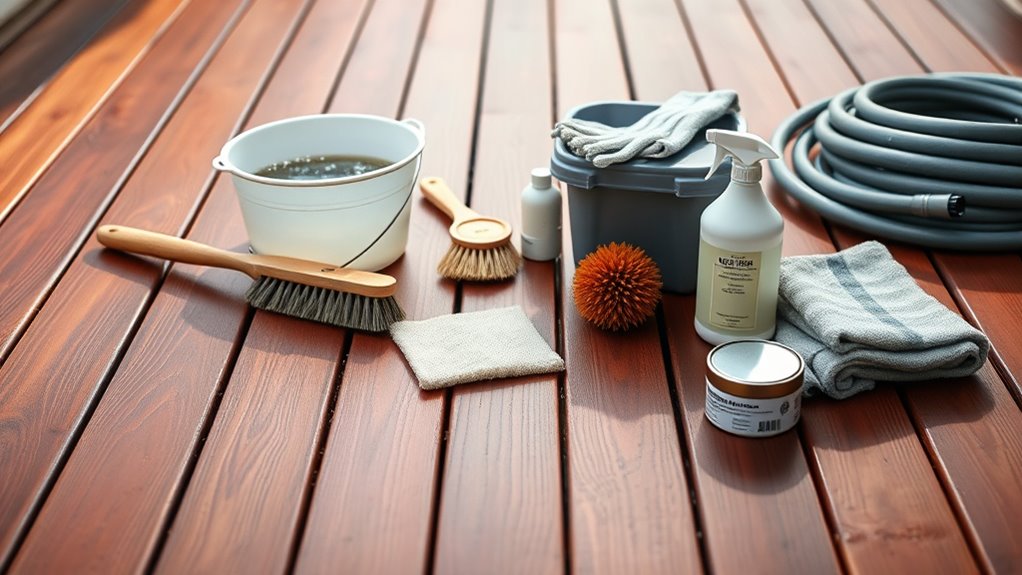
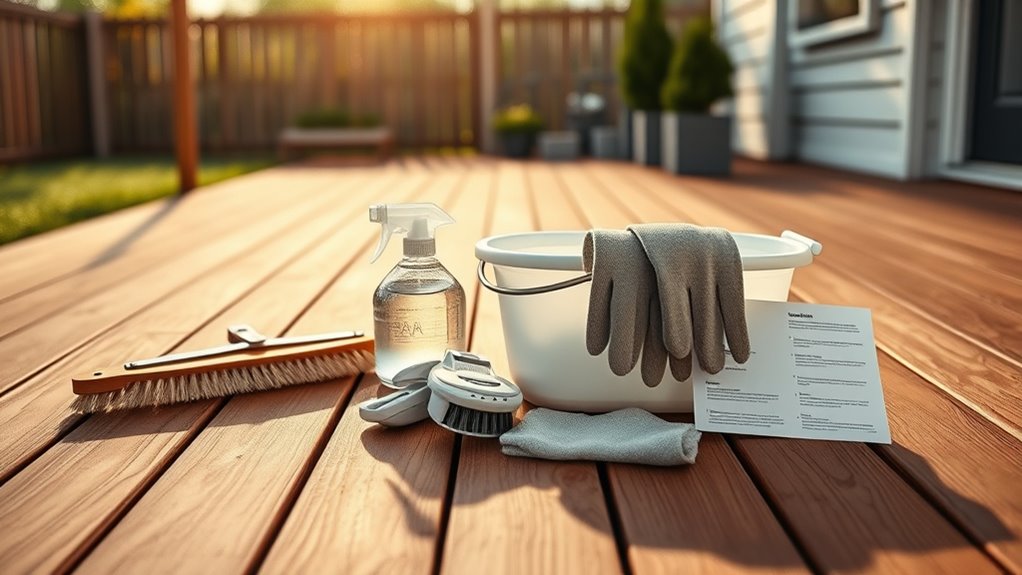
When you prepare to clean ipe, gather the right tools and supplies so you can work efficiently and avoid damaging the wood. You’ll need sturdy, non-abrasive items and safety gear to protect yourself and the deck.
Choose brushes and pads designed for hardwood, low-pressure rinsing equipment, and soft cloths for drying and finishing touches. Keep everything organized to minimize rehandling wet boards, and inspect tools for grit that could scratch ipe.
Use hardwood-safe brushes, gentle rinsing, and soft cloths—keep tools tidy and grit-free to protect ipe.
- Soft-bristle deck brush or nylon pad
- Garden hose with adjustable nozzle or low-pressure washer setting
- Cotton or microfiber towels for blotting and drying
- Nitrile gloves and safety glasses
Safe Cleaners That Won’t Strip Ipe Oils
You’ll want cleaners that respect ipe’s natural oils, so pick gentle pH-neutral products or oil-safe wood brighteners.
Avoid strong alkaline or bleach-based chemicals, and use diluted mild detergents for light cleaning.
Test any cleaner in an inconspicuous spot first to confirm it won’t strip or dull the wood.
Gentle pH-Neutral Cleaners
Although Ipe stands up to wear, its surface oils are delicate, so choose gentle, pH-neutral cleaners that won’t strip or dry the wood. You’ll protect color and natural oils by avoiding alkaline or acidic solutions.
Mix a recommended pH-neutral deck soap with warm water, test a small area, then gently scrub with a soft-bristle brush following the grain. Rinse thoroughly and let the deck dry before any oiling.
Look for biodegradable, residue-free formulas labeled safe for hardwoods to minimize damage.
- Use manufacturer-recommended pH-neutral soap
- Test in an inconspicuous spot first
- Soft-bristle brush only
- Rinse completely and air dry
Oil-Safe Wood Brighteners
Because oil-safe wood brighteners restore faded color without stripping Ipe’s natural oils, they’re a smart choice after cleaning with a pH-neutral soap.
You’ll apply a product labeled safe for oily hardwoods, following dilution and dwell times specified by the manufacturer.
These brighteners lift embedded dirt and neutralize graying without removing the deck’s natural oils, so you preserve density and resistance to moisture.
Rinse thoroughly to avoid residue.
Test a small area first to confirm appearance.
After the brightener dries, you can evaluate whether any oil maintenance or sealing is needed, based on color and water behavior.
Diluted Mild Detergents
When you mix a mild, pH-neutral detergent with water at the manufacturer’s recommended dilution, it gently cleans Ipe without stripping the wood’s natural oils or damaging the dense grain.
You’ll apply the solution with a soft-bristle brush or mop, working along the grain to lift dirt and mildew.
Rinse thoroughly with low-pressure water to avoid fiber tear and prevent residue.
Test a small area first to confirm compatibility and colorfastness.
Avoid bleach, strong alkalines, or concentrated soaps that can dry the wood.
- Use pH-neutral cleaners
- Follow dilution instructions
- Brush with the grain
- Rinse fully
Effective Homemade Ipe Deck Cleaning Mixes
You can keep Ipe safe by choosing the right homemade cleaner for the stain: mild soap and water for routine dirt, an oxygen bleach solution for mildew and deep grime, and an oil-based stain remover for greasy spots.
Start with the gentlest option and only step up if the problem persists.
Test any mix on a hidden patch before treating the whole deck.
Mild Soap And Water
If you want a simple, safe cleaning solution for ipe decking, mix a mild liquid dish soap with warm water and you’ll remove most surface dirt and oils without harming the wood’s natural oils or finish.
Use a soft-bristle brush, work along the grain, and rinse thoroughly with clean water. Don’t let suds dry on the surface.
Test a small area first to confirm no color change.
Repeat as needed for regular maintenance; this method preserves the wood while keeping upkeep easy.
- Ratio: 1–2 tablespoons soap per gallon
- Soft brush, not wire
- Rinse until clear
- Test first
Oxygen Bleach Solution
Although it’s gentler than chlorine bleach, oxygen bleach packs enough cleaning power to lift stains, mildew, and gray weathering from ipe without stripping natural oils when used properly.
Mix one part powdered oxygen bleach to about 16 parts warm water (roughly 1/2 cup per gallon) and dissolve fully.
Wet the deck first, apply solution with a pump sprayer or stiff brush, and let it dwell 10–15 minutes without drying.
Agitate stubborn areas gently, then rinse thoroughly with a hose or pressure washer on a low setting.
Test a small area first and repeat only if needed to avoid overworking wood.
Oil-Based Stain Remover
When tackling grease or oil stains on ipe, an oil-based stain remover can break down the residue without stripping the wood’s natural oils. You’ll want a blend that lifts grime while staying gentle on dense tropical hardwood.
You’ll mix warm water, a mild liquid castile soap, a small amount of citrus-based solvent (like d-limonene), and a splash of mineral oil to emulsify and loosen oils.
Work gently with a soft-bristle brush, rinse thoroughly, and dry. Test a hidden area first. Reapply only if necessary to avoid buildup.
- Warm water base
- Castile soap for mild cleaning
- Citrus solvent to cut grease
- Mineral oil to protect
Hand-Cleaning an Ipe Deck: Step-By-Step
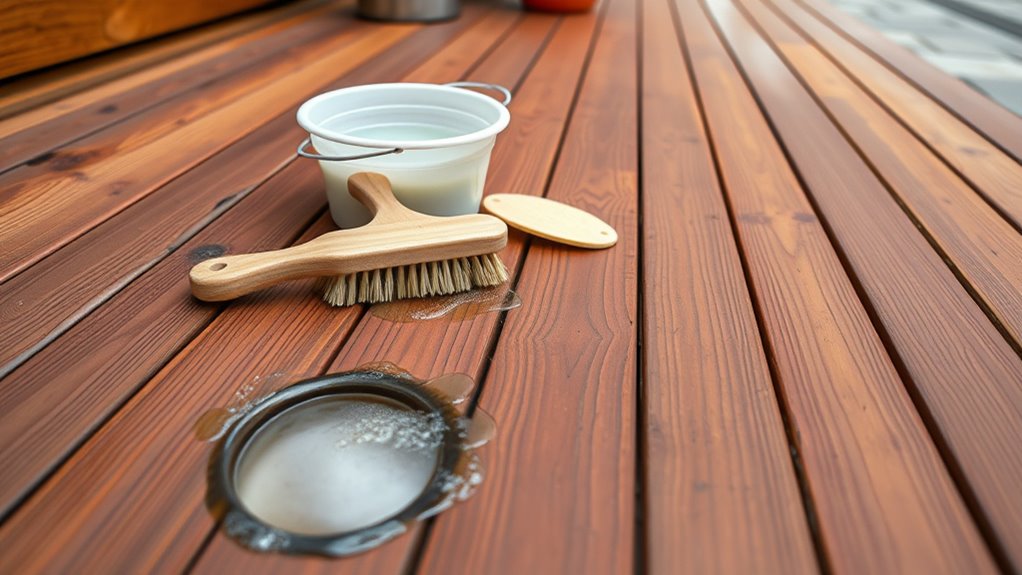
Before you start, gather your supplies and clear the deck so you can work methodically and avoid missing spots. Put on gloves and safety glasses. Sweep debris, then mist the wood with water.
Mix a mild, pH-neutral cleaner per label directions. Working in small sections, apply cleaner with a soft-bristle brush, scrubbing along the grain to lift dirt and stains. Rinse each section thoroughly with a garden hose or buckets of clean water before the cleaner dries.
For stubborn spots, repeat scrub cycles or use a wood-specific brightener. Let the deck dry fully before inspecting and applying any finish.
Pressure-Washing an Ipe Deck: Settings & Distance
When you pressure-wash ipe, aim for an ideal pressure range (usually 800–1200 psi) to remove dirt without harming the wood.
Use a fan or 25–40° nozzle rather than a pinpoint tip to spread the spray and reduce gouging.
Keep the wand 12–18 inches from the deck and test a small area first to confirm the setting.
Optimal Pressure Range
How hard should you let a pressure washer blast an ipe deck? You’ll want a conservative approach: stay low enough to clean but high enough to avoid fiber tearing. Aim for a pressure window that removes dirt without gouging—too high strips wood, too low wastes effort.
Keep wand distance consistent and move steadily.
- Start around 500–800 psi for light cleaning
- Increase cautiously up to 1200–1500 psi for stubborn grime
- Maintain 12–18 inches distance, adjusting slightly as needed
- Test on an inconspicuous area before full treatment
Nozzle Type Selection
Which nozzle should you pick to clean your ipe deck without damaging it? Choose a fan-style nozzle with a wide spray pattern—25° or 40°—to disperse force and avoid gouging.
Use a rotary or turbo nozzle only if you’re experienced and keep pressure low; they concentrate force and risk etching the wood.
Opt for stainless-steel or brass fittings to prevent corrosion, and inspect nozzle tips for wear before starting.
Match nozzle flow to your pressure washer’s PSI and GPM rating to maintain safe cleaning.
Replace damaged tips immediately and test on an inconspicuous spot before treating the whole deck.
Safe Spray Distance
After choosing the right nozzle, you’ll need to control how close you hold the wand to the ipe. Keep a steady distance to avoid etching the grain: too close strips fibers, too far wastes pressure. Start at 18–24 inches, test a small inconspicuous area, then adjust.
Move the wand in smooth, overlapping passes at a shallow angle.
- Begin 24″ away for soft grime
- Move to 18″ for stubborn spots only
- Never drop below 12″—you’ll risk damage
- Use a test patch before full cleaning
Maintain consistent motion; don’t linger in one spot.
Removing Mildew, Black Streaks, and Tannins
When mildew, black streaks, or tannin stains appear on your Ipe deck, you’ll want to treat them promptly to prevent discoloration and surface damage; scrub gently with a soft-bristle brush and a mild cleaner (oxygen bleach diluted per label) to lift stains without harming wood. Rinse thoroughly and let dry; repeat if needed. For persistent tannins, use a wood-specific brightener following cleaner instructions. Test a small area first.
| Problem | Cleaner | Action |
|---|---|---|
| Mildew | Oxygen bleach | Scrub, rinse |
| Black streaks | Deck cleaner | Repeat, dry |
| Tannins | Brightener | Test, treat |
Removing Oil, Grease, and Food Stains Safely
If oil, grease, or food lands on your Ipe deck, act quickly to prevent deep staining by blotting excess and using the right cleaners. Start with a dry absorbent (paper towel or cloth), then apply a mild dish soap solution and gently scrub with a soft-bristle brush.
For stubborn spots, use a poultice of baking soda and water to lift residue without harsh chemicals. Rinse thoroughly and let dry.
Avoid bleach, wire brushes, or pressure washers on high settings that can damage fibers.
- Blot first, never rub aggressively
- Use mild detergent, warm water
- Try baking-soda poultice for stubborn stains
- Rinse and air-dry fully
When to Sand Ipe Boards and How to Spot-Repair
You should sand Ipe only when weathering, deep stains, or raised grain won’t come out with cleaning and brightening.
Look for localized discoloration, splinters, gouges, or areas that trap water as signs that a spot-repair is needed.
When you do sand, blend from coarse to fine grit, sand with the grain, and feather the edges so repairs sit flush and natural.
When To Sand
Because ipe holds up so well, you’ll only need to sand in specific situations: raised splinters, deep stains or spills that won’t lift with cleaners, uneven boards from cupping, or to prepare small areas for a finish or repair.
Sanding should be local and light—use fine-grit paper and sand along the grain to avoid glare or new scratches. Test a small patch first, then blend edges so repairs don’t stand out. Clean dust thoroughly before finishing.
- Use 120–150 grit for leveling
- Finish with 180–220 grit for smoothness
Sand damp-free wood only. Protect surrounding boards with tape.
Spot-Repair Signs
When you spot a raised splinter, dark stain, or a board that’s cupped more than the others, it’s time to contemplate a localized sand-and-repair rather than a full refinish.
Inspect surrounding boards for loosened fasteners, rot, or deep gouges. Mark affected areas and test a small sanding patch to confirm color and grain match.
For stains, clean with a mild wood cleaner before sanding—some discoloration lifts without abrasion. Remove splinters, sand just to smooth edges, and feather into adjacent wood.
Replace severely damaged boards. Finish spot repairs with the same finish as existing decking to blend appearance.
Sanding Technique Tips
If you decide to sand your Ipe boards, pick the right time and tools so you don’t harm the dense hardwood: sand only when the deck is clean, dry, and free of loose fasteners, and use a random-orbit sander with 80–120 grit to remove surface roughness without digging into the grain.
You should sand sparingly—just enough to blend stains, splinters, or raised grain. Spot-repair small areas by feathering edges and avoiding deep passes.
Always sand with the grain, keep the sander moving, and vacuum debris before finishing or oiling.
- Sand with the grain
- Feather damaged edges
- Use moderate pressure
- Clean dust thoroughly
Restore or Maintain Ipe Color: Oil Vs. Gray
Though exposure to sun and weather will eventually gray your ipe, you can choose to keep its rich brown-red tones with an oil or let it age naturally to a silver-gray — and each approach has trade-offs in appearance, maintenance, and longevity. You’ll oil if you want immediate color restoration and UV protection; expect yearly to biannual reapplications. Letting it gray saves products and labor but accepts color change and slightly reduced resistance to stains. Decide based on look and time.
| Option | Key point |
|---|---|
| Oiling | Restores color, needs repeat care |
| Natural gray | Low maintenance, changes appearance |
Routine Maintenance Checklist & Seasonal Care
Because regular care keeps ipe decks safe and looking their best, set a simple seasonal checklist you can actually stick to. Inspect boards and fasteners each season, sweep debris weekly, and rinse with a gentle cleaner after heavy use or pollen.
Apply oil or let gray naturally develop based on your finish choice, timing treatments in spring or fall.
- Sweep and rinse: remove grit and organic matter.
- Inspect fasteners and boards: tighten or replace as needed.
- Clean spills promptly: use mild soap and water.
- Seasonal oiling or letting it gray: choose and schedule accordingly.
Warning Signs & Mistakes That Cause Damage
When you ignore early warning signs or use the wrong products, small issues quickly become costly damage—split boards, stubborn stains, and compromised fasteners are common results. Watch for color shifts, soft spots, mildew, loose screws, and raised splinters. Don’t power-wash too close, use bleach on raw wood, or seal over grime. Act fast: clean spills, tighten fasteners, and strip improper coatings before refinishing.
| Warning | Cause | Fix |
|---|---|---|
| Discoloration | UV or mildew | Clean, sand, oil |
| Soft spots | Rot/moisture | Replace board |
| Loose fasteners | Corrosion | Replace screws |
| Splinters | Drying | Sand, seal |
| Stains | Oil/iron | Clean, neutralize |
Frequently Asked Questions
Can I Install Plants Directly on Top of an Ipe Deck?
You can, but you shouldn’t place soil or pots directly on Ipe; they’ll trap moisture and stain or warp the wood. Use raised planters, pot feet, or plastic trays to protect the deck and allow airflow beneath.
Are Pets’ Nails or Urine Harmful to Ipe Wood?
Pets’ nails can scratch Ipe’s surface, and urine’s acidity can stain or etch if left; you should trim nails, quickly rinse urine, and periodically oil or seal the deck to minimize damage and maintain appearance.
Does Deck Furniture Finish or Stain Ipe Over Time?
Yes — untreated furniture can gradually stain or abrade ipe over time from finishes, rust, or trapped moisture; you should use protective pads, lift furniture occasionally, and apply coasters or sealers to minimize marks and color changes.
Can I Use Wood Brighteners on Newly Installed Ipe?
Yes — you can use a wood brightener on newly installed ipe, but you should wait until the surface weathering is appropriate, follow manufacturer instructions, rinse thoroughly, and test a small area to avoid unwanted color or grain changes.
Will Routine Uv-Protective Finishes Trap Moisture?
No, routine UV-protective finishes generally won’t trap moisture if the product is breathable and you apply thin, even coats; otherwise, heavy film-formers can slow drying and trap moisture, so pick formulations labeled water‑vapor permeable.
Conclusion
You’ve got this: clean your ipe deck when it needs it, use the right tools and gentle cleaners, and avoid high pressure that strips natural oils. Spot-sand only where needed, then decide whether to preserve the rich brown with ipe oil or let the boards weather to gray. Keep a simple seasonal checklist, watch for warning signs like splintering or mold, and skip harsh chemicals. With regular, careful care your ipe will last beautifully for decades.