30 Practical Ways to Improve Self-Discipline and Stay Consistent
You can build real self-discipline by starting small: do one measurable habit today, celebrate the tiny win, and schedule short focus blocks during your peak energy. Remove distractions, automate repetitive tasks, and anchor new actions to existing routines so doing the right thing becomes automatic. Track progress daily, use 7-day micro-goals, and audit systems monthly to tweak what’s not working. Keep this up and you’ll find practical steps and templates to expand your consistency.
Quick Starter Plan: 3 Actions You Can Do Today
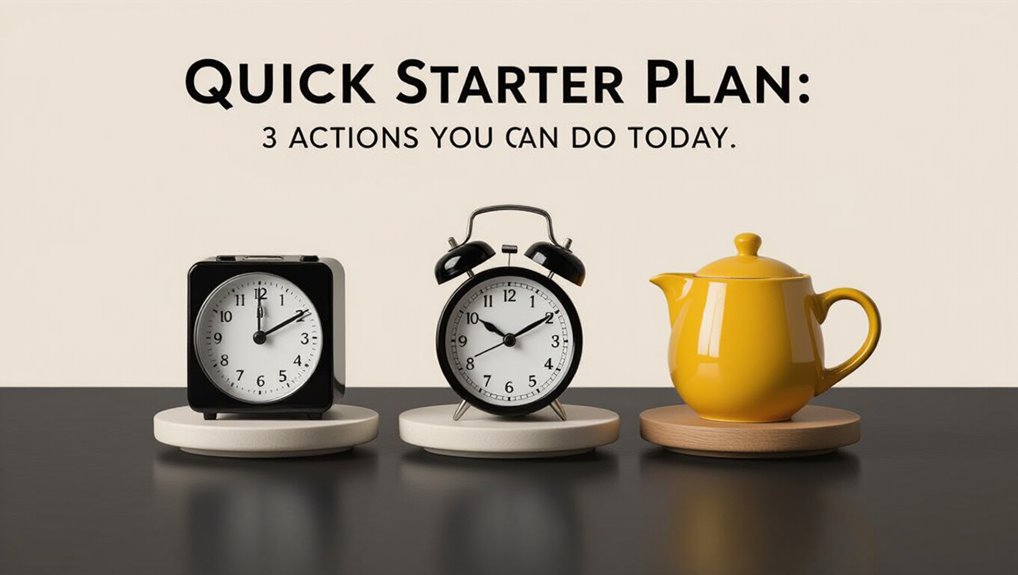
Pick one small thing and do it now: make your bed, set a 25-minute timer to focus on a single task, or write down three non-negotiable priorities for today.
Then choose two more concrete actions: clear one cluttered surface and schedule a short walk.
You’ll build momentum, prove progress to yourself, and make consistency easier tomorrow.
Start With One Measurable Habit
When you start with one measurable habit, you make progress visible and avoid getting overwhelmed by too many vague goals. Pick one small, specific action, track it daily, and celebrate tiny wins. Consistency beats intensity; adjust targets as needed. Use a simple tracker like the table below to stay honest and motivated.
| Day | Action | Done |
|---|---|---|
| Mon | 10 min | ✓ |
| Tue | 10 min | ✓ |
Define Why This Habit Matters to You
Ask yourself what drives you to stick with this habit and write that reason down so it stays clear.
Connect the habit to a core value—like health, family, or growth—so it feels meaningful, not arbitrary.
When your motivation aligns with your values, you’re far more likely to keep going.
Clarify Personal Motivation
Why does this habit matter to you? You’ll stay focused when you name the real benefit—energy, confidence, progress. Keep reasons short, specific, and measurable so you can test them.
| Motivation | Example |
|---|---|
| Immediate gain | More energy after workouts |
| Short-term goal | Finish a project this month |
| Long-term payoff | Career advancement |
Link Habit To Values
Meaning shapes action, so tie each habit to a core value you actually care about—integrity, curiosity, health—so it isn’t just something you “should” do.
When you link a habit to a value, you’ll feel internal accountability. Remind yourself why it matters, phrase goals around who you want to be, and choose triggers that reflect that value.
That alignment makes consistency sustainable.
Break Big Goals Into Tiny Daily Actions
Once you break a big goal into tiny daily actions, you’ll turn vague ambition into a clear, repeatable routine that actually moves you forward.
Choose one concrete task per day, small enough you can’t skip it. Track completion, celebrate tiny wins, and adjust tasks when progress stalls.
Consistency compounds: tiny steps become habits, and habits build real achievement without overwhelming your willpower.
Use Time Blocking to Protect Focus Windows
Block out specific chunks of your day for deep work so you can tackle important tasks without interruptions.
Schedule shorter blocks to handle distractions and quick admin so they don’t eat into your focus windows.
Stick to the plan and treat those blocks as nonnegotiable appointments.
Schedule Deep Work
Pick two or three daily windows where you’ll do your most important, cognitively demanding tasks and protect them like appointments.
During those slots, turn off interruptions, set a clear outcome, and use a single task focus.
Track progress and adjust timing based on when you’re naturally sharp.
Treat these blocks as nonnegotiable to build consistent momentum and deepen concentration over time.
Block Distraction Time
After you’ve set deep-work windows, reserve separate distraction-free blocks to deal with interruptions and low-focus tasks so they don’t bleed into your high-value time.
Use short, scheduled slots for email, calls, and errands. Turn off notifications, set timers, and stick to boundaries.
This habit preserves momentum, reduces context switching, and makes your focused periods reliably productive.
Implement the Two-Minute Rule for New Routines
When starting a new habit, keep it tiny: commit to just two minutes so you can overcome resistance and build momentum.
You’ll simplify starts, reduce excuses, and make consistency automatic. Use tiny wins to expand later; track progress daily; celebrate small gains.
- Start with one micro-action
- Tie it to an existing cue
- Increase duration after a week
Build a Simple Morning Ritual That Sticks
Although mornings can feel chaotic, you can design a short, predictable ritual that sets a calm, focused tone for your day.
Choose two to four doable actions—hydrate, stretch, review one priority—then do them in the same order. Keep it under 15 minutes, remove friction, and track consistency.
Small, repeatable wins wire discipline, reduce decision fatigue, and make momentum easy to maintain.
Anchor New Habits to Existing Routines
If you want new habits to stick, latch them onto things you already do automatically—like brushing your teeth, brewing coffee, or shutting down your laptop.
Use those cues to trigger micro-habits so they feel effortless. Keep actions tiny, specific, and tied to a clear context.
Let everyday cues spark tiny, specific micro-habits—simple actions in a clear context that become effortless with repetition
Repeat until automatic, then expand gradually.
- Tie habit to a daily cue
- Start with tiny actions
- Expand after consistency
Track Progress With a Visible Habit Tracker
Because progress becomes real the moment you see it, put your habits on display with a visible tracker you update every day.
Choose a simple chart, calendar, or app that shows streaks. Mark each success visibly to build momentum, spot patterns, and adjust when you miss days.
The daily ritual reinforces commitment, reduces friction, and turns abstract goals into measurable actions.
Set Specific, Deadline-Driven Mini-Goals
Break your big goals into clear, specific mini-goals with firm deadlines so you know exactly what to do and when to do it.
You’ll stay focused, measure progress, and avoid overwhelm by working one concrete step at a time. Set deadlines that push you but stay realistic to maintain momentum and confidence.
- Define one measurable outcome per mini-goal
- Assign a firm completion date
- Limit each step to a week or two
Use Implementation Intentions: When/Then Plans
Once you’ve got specific mini-goals and deadlines, set clear when/then plans to turn intentions into action.
Decide precise cues and responses: when X happens, then you do Y. Keep them simple, realistic, and tied to existing routines.
Write them down, review daily, and adjust if needed. These implementation intentions bypass deliberation and make follow-through automatic and reliable.
Set Decision-Free Defaults to Reduce Choice Fatigue
If you want to save willpower for big choices, set decision-free defaults that handle routine ones automatically. You’ll reduce daily friction by preselecting options and automating minor decisions so focus stays sharp.
Choose defaults that match your goals and adjust them rarely.
- Pick a standard meal or snack plan
- Automate bill payments and subscriptions
- Use default outfit or work setup choices
Reduce Friction by Prepping the Night Before
When you prepare key items and choices the night before, mornings run smoother and you’ll start the day with momentum instead of friction.
Lay out clothes, prep meals, pack bags, and set priorities so decisions are minimized. Charge devices, queue workouts or focused tasks, and note tomorrow’s top three goals.
Small preparations reduce resistance and make sticking to routines effortless.
Design Your Environment for One-Step Actions
Because you’ll follow through more often when actions feel effortless, shape your space so the next step is obvious and reachable.
Put essentials where you’ll see them, label or color-code triggers, and simplify tools to one motion. Make habits require one clear action.
- Place your workout clothes by the door
- Keep a single notebook on your desk
- Pre-fill water bottle within arm’s reach
Remove Tempting Distractions Proactively
While you’re setting up the cues that make good habits easy, take the extra step of removing temptations so you don’t have to rely on willpower.
Put distracting apps in a folder, mute unnecessary notifications, and store snack triggers out of sight.
Create physical distance from diversions and replace them with simple, productive alternatives so focus becomes the default, not a constant struggle.
Schedule Deliberate Rest and Recovery Windows
If you want peak focus and sustainable progress, schedule deliberate rest and recovery windows into your day so downtime becomes as purposeful as work. Short, planned breaks and longer recovery periods prevent burnout, restore cognitive energy, and improve long-term discipline by making effort feel manageable rather than endless.
You’ll maintain momentum by alternating focused work with intentional recovery.
- 10–20 minute microbreaks
- Daily tech-free hour
- Weekly restorative activity
Practice Delayed Gratification With 7-Day Micro-Goals
Planned recovery makes sustained effort possible, but you also need a habit that trains patience and follow-through: practice delayed gratification with 7-day micro-goals. Set one simple target each week, resist immediate rewards, track progress daily, and celebrate on day seven. Small wins build willpower and momentum.
| Day | Action |
|---|---|
| 1 | Plan |
| 2 | Start |
| 3 | Persist |
| 4 | Adjust |
| 5 | Focus |
Use Accountability Partners or Groups
When you team up with an accountability partner or group, you create a simple external check that keeps you honest and consistent. People notice missed commitments and celebrate progress, which makes you more likely to follow through.
Partnering with others creates an external check—people spot slips, celebrate progress, and keep you accountable to your goals
You’ll get feedback, encouragement, and gentle pressure to stay on track.
- Share clear, specific goals
- Schedule regular check-ins
- Give and receive constructive feedback
Make Commitments Public to Increase Follow-Through
You can boost follow-through by making your commitments public to friends, colleagues, or online groups.
Naming a Public Accountability Partner or announcing goals on social media raises the cost of backing out and gives you regular reminders.
Use clear public statements and check-ins to keep momentum and track progress.
Public Accountability Partners
Making your goals public gives them weight and a higher chance of getting done. Invite a trusted partner to check progress, set regular check-ins, and agree on consequences.
You’ll stay honest, get timely feedback, and adjust faster. Use a partner who’s supportive but firm so you’ll feel accountable without shame.
- Choose someone reliable
- Schedule brief reviews
- Define clear expectations
Social Commitment Announcements
Because public commitments tap into social norms and reputation, announcing your goals increases the pressure to follow through and makes slacking feel more costly.
Tell friends, post on social media, or declare deadlines to trusted groups. You’ll get reminders, support, and social consequences that boost consistency.
Choose audiences who care, set measurable promises, and update them regularly to maintain accountability and momentum.
Reward Consistency, Not Perfection
Though perfection feels satisfying, reward the steady effort instead — small, regular wins build habits far more reliably than isolated flawless performances.
You’ll stay motivated when you celebrate progress, track streaks, and forgive slip-ups. Aim for consistency over ideal outcomes; set attainable checkpoints, notice daily improvements, and adjust expectations.
This keeps momentum and makes discipline sustainable.
- Celebrate small wins
- Track streaks
- Forgive slip-ups
Use Habit-Stacking to Chain Productive Behaviors
Start by anchoring a new habit to something you already do regularly, like making coffee or checking email.
Then link tasks sequentially—after the anchor action, immediately follow with the next small, specific behavior.
Anchor New Habits
When you tie a new habit to something you already do, it becomes easier to remember and follow through—this is the core of habit-stacking.
Anchor habits by pairing them with reliable cues you already use. Keep triggers simple, specific, and immediate so habits stick.
- Attach a 2-minute habit to your morning coffee
- Use arriving home as a prompt for tidying
- Do a quick stretch after brushing teeth
Link Tasks Sequentially
Pairing two or three small actions into a single sequence makes it much easier to ride momentum from one task into the next, so you actually get more done with less effort.
Link a morning stretch to making tea, then review priorities. You’ll create reliable cues, reduce decision fatigue, and build consistency.
Start tiny, repeat daily, and expand chains as habits solidify.
Apply the Pomodoro Technique for Sustained Focus
Try the Pomodoro Technique: work in focused 25-minute sprints followed by short breaks to keep your attention sharp and avoid burnout.
You’ll break tasks into manageable chunks, track progress, and reset mental energy. Use a timer, minimize distractions, and review results each cycle to improve productivity.
- Set a clear task goal
- Pause without multitasking
- Adjust sprint length as needed
Keep a Personal Decision Budget to Avoid Willpower Depletion
Since every choice chips away at your self-control, set a simple decision budget to preserve willpower for what matters most. Limit daily nonessential decisions, automate routines, and prioritize high-impact tasks. Track choices briefly to spot drains. Use this quick table to plan:
| Category | Count Limit | Example |
|---|---|---|
| Morning | 3 | Outfit, breakfast |
| Work | 5 | Meetings, tasks |
| Evening | 2 | Leisure, prep |
Learn to Say No With a Simple Script
When you want to protect your time and energy, use a short, polite script to say no so you stay firm without feeling rude.
Practice a clear phrase: thank you, I can’t right now, maybe another time. Keep it consistent and calm so you won’t overexplain.
Practice a short, calm phrase: thank you, I can’t right now — keep it steady and avoid overexplaining.
- Thank you, I can’t right now.
- I’ve other priorities today.
- I’ll pass but appreciate the invite.
Reframe Failure as Feedback and Course-Correct Fast
Although setbacks sting, treat them as clear signals about what to change next: you analyze causes, pick one tweak, and test it quickly. Keep ego out, stay curious, and iterate until it works.
| Signal | Quick Action |
|---|---|
| Missed target | Shorten task, adjust deadline |
| Low energy | Modify routine, rest sooner |
| Confusion | Simplify steps, ask one question |
Use Visualization to Rehearse Desired Actions
If you mentally rehearse the exact steps you want to take, you’ll build a clearer map that makes it easier to act under pressure.
Visualize the setting, your movements, and the obstacles so you respond without hesitation. Practice short, vivid runs-through before tasks to strengthen neural pathways and reduce decision friction.
Visualize the environment and actions; run short vivid rehearsals to sharpen responses and cut decision friction.
- Picture each step clearly
- Include sensory details
- Repeat briefly and often
Track Energy, Not Just Time, for Peak Performance
Visualizing the steps you’ll take works best when you also tune into your energy cycles, because knowing when you’re at peak focus helps you schedule demanding tasks for those windows.
Track how alert, motivated, and creative you feel across the day. Note patterns and arrange deep work during highs, lighter tasks during lows, and brief recovery rituals to maintain consistency without burning out.
Build Routines Around Identity: “I Am the Kind of Person Who
Identity is the quiet engine behind lasting habits: when you phrase goals as “I’m the kind of person who…” you program behavior by changing how you see yourself, and you’ll naturally choose actions that fit that story.
Embrace small, repeatable acts that confirm that identity so choices become automatic.
- Start with one defining action daily
- Reinforce it with visible cues
- Celebrate tiny wins
Audit and Tweak Systems Monthly for Long-Term Gains
Set aside time each month to review how your systems are performing and whether they’re helping you hit your goals.
Adjust the metrics you track and tweak targets that no longer fit your priorities.
Try one small experiment at a time so you can see what actually improves your routine.
Monthly System Review
When you review your systems monthly, you catch small problems before they grow and keep what’s working sharpened.
Use a quick checklist to inspect habits, tools, and routines. Note friction points, celebrate wins, and decide one focused tweak. Keep records so trends emerge without overthinking.
- Inspect habits and routines
- Log friction and wins
- Implement one focused tweak
Adjust Metrics And Goals
You’ve just checked routines and noted what’s working and what’s not—now use that evidence to adjust the measures you track and the goals you aim for.
Recalibrate metrics to reflect progress, simplify targets that stall momentum, and raise stretch goals only when consistency’s proven.
Update timelines, remove noisy indicators, and keep metrics actionable so monthly audits guide steady, long-term improvement.
Implement Small Experiments
Because small, focused experiments reveal what truly moves the needle, run monthly audits and tweak one system element at a time so you can see clear cause and effect.
You’ll test adjustments, track outcomes, and keep what works. Small wins compound. Iterate quickly, learn, and avoid overhauls that stall progress.
- Change one habit parameter
- Measure and record results
- Keep successful tweaks permanent
Automate Repeat Tasks to Free Mental Bandwidth
If repetitive tasks keep stealing your focus, automate them so your attention goes to work that really matters.
Set up routines, templates, and simple scripts for emails, billing, backups, and data entry.
Use calendar automations, rules, and smart tools to reduce decision fatigue.
Freeing mental bandwidth helps you stick to priorities, maintain momentum, and protect willpower for creative, high-impact tasks.
Frequently Asked Questions
How Do I Rebuild Discipline After a Long Relapse?
You rebuild discipline by forgiving yourself, setting tiny consistent habits, tracking progress, removing big temptations, scheduling rituals, celebrating small wins, asking for support, and adjusting expectations so you’ll stay motivated and steadily regain momentum.
Can Medication or Supplements Help Improve Self-Discipline?
Yes — certain prescription meds (for ADHD, depression) and some supplements (omega-3s, vitamin D) can help, but they’re not magic; you’ll need professional guidance, proper diagnosis, and consistent habits alongside any treatment.
How Do Cultural or Family Expectations Affect Habit Formation?
Cultural and family expectations shape your habits by setting norms, pressures, and rewards; they’ll nudge you toward certain routines, create guilt when you diverge, and influence motivation, identity, and social support—so you’ll adapt habits to fit those cues.
What if My Work Requires Frequent Context Switching?
If your work forces frequent context switching, you’ll prioritize quick rituals: batch similar tasks, use short timed sprints, keep a visible task list, set clear micro-goals, and schedule recovery breaks to reset focus between shifts.
How Do Sleep Disorders Impact Consistency and Habits?
Sleep disorders disrupt your sleep architecture, so you’ll feel fatigued, irritable, and have impaired focus, which undermines routine formation and consistency; prioritize diagnosis, treatment, and regular sleep schedules so you can rebuild reliable habits.
Conclusion
You’ve got a clear starter plan and practical tools to make progress today. Pick one measurable habit, name why it matters, and break it into tiny daily actions. Protect focus with time blocking, track energy as well as time, and build routines that match the person you want to be. Automate repeats, audit systems monthly, and tweak as you go. Keep consistent small wins—they compound into major change.
