How to Protect Outdoor Wooden Furniture From Heavy Rain
You can protect outdoor wooden furniture from heavy rain by sealing it with a compatible, breathable finish and adding UV inhibitors, then elevating legs on nonrot blocks or rubber feet to improve drainage. Use breathable waterproof covers, store cushions in sealed bins, and shelter pieces under eaves or a pergola. Tighten joints, dry items promptly after storms, and treat mildew quickly. Follow simple prep and maintenance steps and you’ll find more practical tips and repair tricks ahead.
Protect Furniture Now : Quick Rainy‑Day Checklist
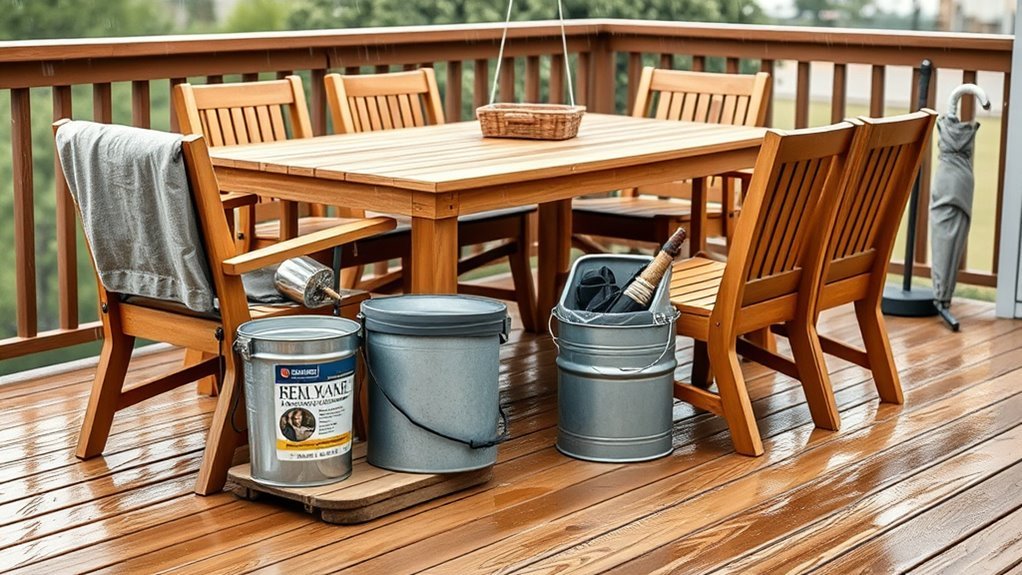
Before the storm hits, take a few minutes to secure your outdoor wood furniture so you won’t deal with swollen joints or peeling finish later.
Quickly move lightweight pieces under cover or stack them tightly to reduce surface exposure. Close umbrellas and tie cushions in waterproof bags or bring them inside.
Elevate legs with blocks or furniture glides to prevent standing water damage. Use tarps only if well-vented to avoid trapped moisture; anchor them so they won’t flap and abrade finishes.
Check joints and tighten screws; loosened fasteners let water in. Note wet spots after the rain and dry items promptly.
Choose Sealers and Finishes by Wood Type
When you pick a sealer or finish for outdoor wood, match the product to the species and its expected exposure. Hardwoods like teak and ipe need penetrating oils that nourish dense grain, while softer woods such as pine or cedar benefit more from film-forming finishes that add a protective barrier.
Test compatibility on a hidden spot: oils soak in, varnishes sit on the surface.
For wet climates, choose breathable finishes that repel water but allow moisture to escape. Reapply according to manufacturer intervals, and sand lightly before treatment.
Use UV inhibitors on exposed pieces to prevent sun-driven breakdown and maintain water resistance.
Use Covers, Elevation, and Shelters
If you want your outdoor wood to last through heavy storms, combine covers, elevation, and simple shelters to cut its direct contact with water and ground moisture. Use breathable, waterproof covers, lift legs on blocks or rubber feet, and place furniture under eaves or a pergola. Check covers often for trapped moisture and ventilate to prevent mold. Elevation promotes drainage; shelters reduce direct splash. Repair or replace damaged supports promptly.
| Item | Benefit | Tip |
|---|---|---|
| Cover | Keeps rain off | Use breathable fabric |
| Elevation | Improves drainage | Use non-rot blocks |
| Shelter | Reduces splash | Position under eaves |
Store and Winterize Outdoor Wood Furniture
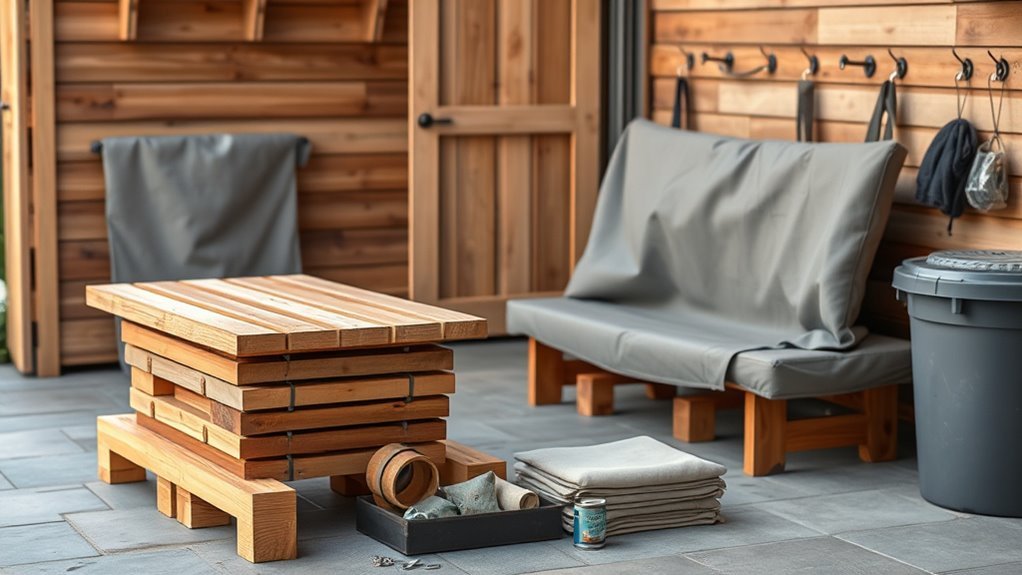
Though heavy rain and freezing temps can wreck unfinished wood, you can extend your furniture’s life by storing and winterizing it properly. Move pieces to a dry, ventilated shed or garage before prolonged wet weather. If inside space is limited, stack chairs on pallets and cover with breathable tarps.
Clean and dry each item first, loosening cushions and storing fabrics separately in sealed bins. Apply a maintenance coat—oil, sealer, or exterior-grade varnish—to cured, dry surfaces months before storage.
Elevate legs to avoid ground moisture and inspect covers periodically, airing items on warm, dry days to prevent mildew.
Inspect and Fix Rain Damage (Common Problems & Quick Repairs)
After storing and winterizing your pieces, you’ll still need to check for rain damage so small problems don’t become bigger ones. Inspect joints, finishes, and legs for softness, mold, or rusted fasteners. Tackle issues promptly: dry, clean, repair, and reseal.
- Sand away flaking finish, then wipe dust before refinishing.
- Replace swollen or rotten slats; use marine glue and stainless screws.
- Treat mildew with diluted bleach or vinegar, rinse and dry thoroughly.
- Tighten or swap corroded hardware; lubricate moving parts.
You’ll extend furniture life by addressing these common problems quickly and with simple repairs.
Frequently Asked Questions
Can I Leave Cushions on During Heavy Rain?
You shouldn’t leave cushions out during heavy rain; they’ll soak, grow mold, and degrade faster. If you can’t bring them inside, use waterproof covers, elevate them for drainage, and dry thoroughly as soon as the storm passes.
How Do I Protect Metal Hardware From Rust?
You’ll prevent rust by cleaning hardware, drying it, then applying a rust-inhibiting primer or oil, like WD-40 or marine-grade lubricant, and sealing with paint or clear coat; check and reapply regularly to keep moisture out.
Will Oil-Based Sealers Attract Termites or Pests?
No, oil-based sealers won’t inherently attract termites or pests; they actually repel moisture which reduces decay. But they don’t act as insecticides, so you’ll still need proper pest treatments or pressure-treated wood for termite protection.
Can Pressure Washing Damage Sealed Wood?
Yes, pressure washing can damage sealed wood if you use too high pressure, hold the nozzle too close, or use a narrow spray tip; you’ll avoid damage by using lower pressure, wider spray, and testing a small area first.
How Often Should I Reapply Uv-Specific Treatments?
You should reapply UV-specific treatments every 1–2 years for moderate sun exposure and annually if your furniture gets intense, direct sunlight; check finish wear yearly and touch up sooner if you see fading, chalking, or water beading loss.
Conclusion
You’ve got the tools to keep your outdoor wooden furniture safe from heavy rain. Seal the wood for its species, use breathable covers, lift legs off wet ground, and add shelters or move pieces under eaves when storms hit. Store or winterize porous items and check joints, finishes, and cushions after bad weather. Fix minor rot and recoat seals promptly to avoid bigger damage—act fast, maintain regularly, and your furniture will last many seasons.