Is Pickling Fermentation? Understanding the Difference and Similarities
You probably use the words pickling and fermentation interchangeably, but they are not identical processes and the differences matter for flavor, safety, and nutrition. You will learn how vinegar, brine, and microbes each work, which methods preserve probiotics, and when one approach suits your kitchen better. Additionally, there are a few common myths to watch out for.
Understanding the Basics of Pickling and Fermentation
You’ll learn what pickling is, which involves preserving food in an acidic brine or vinegar, and what fermentation is, where microbes convert sugars into acids, gases, or alcohol.
You’ll also see the key differences, such as whether acidity comes from added vinegar or from microbes doing the work.
This will help you identify which foods are true fermented products and which are simply pickled.
What is Pickling?
Pickling is the method of preserving foods by immersing them in an acidic solution or creating an environment where beneficial microbes produce acid, resulting in safe, long-lasting, and flavorful outcomes. You will learn that pickling fermentation can overlap; some pickles use vinegar, while others rely on microbes to acidify. You control salt, temperature, and time to steer the outcome. Expect crispness, tang, and shelf stability. Below is a simple comparison to illustrate common approaches.
| Method | Typical components |
|---|---|
| Vinegar pickling | Vinegar, water, salt |
| Brine fermentation | Salt, water, natural microbes |
| Heat-processed | Vinegar, heat sealing |
| Quick pickles | Vinegar, short time |
What is Fermentation?
Because microorganisms convert sugars into acids, gases, or alcohol, fermentation is a controlled chemical change that preserves food, develops flavor, and can boost nutrition.
You encourage beneficial microbes, such as lactobacilli or yeasts, by providing sugars, salt levels, and oxygen conditions that favor their growth. As they metabolize substrates, they produce acids that lower pH, gases that create texture, or alcohol that adds complexity.
Fermentation can increase vitamins, break down anti-nutrients, and create probiotics that support your gut. You monitor smell, taste, and acidity to know when it’s done, and you store fermented foods to maintain safety and flavor.
Key Differences Between Pickling and Fermentation
When you compare them side by side, fermentation and pickling appear similar but function very differently. Fermentation utilizes living microbes to transform sugars into acids or alcohol, while pickling typically relies on an acidic solution, such as vinegar, or high salt to preserve food without microbial transformation.
You will notice practical differences. Fermentation develops complex flavors, can boost probiotics, and requires controlled conditions. Pickling, on the other hand, provides immediate acidity, predictable shelf stability, and simpler recipes. Choose fermentation for flavor complexity and live culture benefits; choose pickling for speed, consistency, and safety when you do not want active microbes.
| Fermentation | Pickling |
|---|---|
| Live microbes, evolving flavors | Acid or salt, stable flavors |
| Requires time, monitoring | Faster, predictable results |
The Science Behind Pickling and Fermentation
Pickling preserves food by creating an acidic environment, usually with vinegar or lactic acid, that stops spoilage organisms.
Fermentation, by contrast, uses beneficial microbes to convert sugars into acids, gases, or alcohol, which both preserves and transforms flavors.
Let’s compare how each process works and how they overlap.
How Does Pickling Work?
You’ll see two main ways pickling preserves food: using vinegar or using salt to encourage fermentation.
Vinegar creates an acidic environment that stops spoilage, while salt draws water out of cells by osmosis and helps good bacteria grow.
Understanding those roles makes it easier to choose methods and control flavor and safety.
The Role of Vinegar and Salt in Pickling
Although pickling can mean either preserving with vinegar or fermenting with salt, both methods use chemistry to stop spoilage and shape flavor.
Vinegar creates an acidic environment that kills or inhibits microbes quickly, while salt in fermentation encourages beneficial lactic acid bacteria to outcompete pathogens and slowly acidify the food.
You’ll choose vinegar for rapid preservation and predictable tang, or salt for complex, probiotic-rich results.
The Process of Osmosis in Pickling
Whether you choose vinegar or salt, the next significant player in pickling is osmosis.
Osmosis refers to the movement of water across cell membranes that actually pulls brine into vegetables and drives out their juices.
You’ll notice vegetables soften as water leaves cells, and salt or acid creates a concentrated exterior while flavorful compounds move inward.
Osmosis accelerates flavor exchange and preserves texture while limiting harmful microbes.
How Does Fermentation Work?
To understand fermentation, you should start with the tiny organisms that drive it: bacteria and yeasts that feed on sugars and create acids, gases, or alcohol.
In pickling, lactic acid bacteria are usually the stars, converting sugars into lactic acid that preserves flavor and texture.
You’ll see how controlling salt, temperature, and oxygen helps these microbes outcompete spoilage organisms and shape the final product.
The Role of Microorganisms in Fermentation
When you look closely at pickling, you’ll see it’s really microbes doing the work: bacteria, yeasts, and sometimes molds transform sugars and other compounds into acids, alcohols, and flavor molecules that preserve food and create tangy, complex tastes.
You’ll control which microbes thrive by adjusting salt, temperature, oxygen, and time, guiding safe preservation and the specific aromas and textures you want.
Lactic Acid Bacteria in Fermentation
Because lactic acid bacteria (LAB) outcompete other microbes by producing acid and antimicrobial compounds, they’re the primary drivers of most vegetable pickles and many dairy and meat ferments.
You rely on their acidification to preserve texture, flavor, and safety. LAB metabolize sugars into lactic acid, lower pH, and create bacteriocins and enzymes that shape aroma and inhibit pathogens, so controlled conditions matter.
Is Pickling the Same as Fermentation?
You might think pickling and fermentation are the same because both change flavor and preserve food, but they aren’t identical.
Fermentation uses microbes to produce acids and gases, while some pickling simply uses vinegar to acidify.
Let’s compare their shared steps and the key differences in process and outcome.
Exploring the Similarities
You’ll notice both pickling and fermentation aim to preserve food so it lasts longer.
They can also produce similar tangy, acidic flavors that many people enjoy.
Next, we’ll compare how each process creates those effects.
Both Involve Preserving Food
While both pickling and fermentation aim to extend a food’s shelf life, they do it in different ways.
Pickling typically preserves by acidity from vinegar or added brine, while fermentation preserves by letting beneficial microbes produce acids and other compounds naturally.
You’ll use salt, vinegar, or controlled microbes to slow spoilage, relying on chemistry or biology to keep food safe and edible for a longer period.
Both Can Result in Tangy Flavors
Both processes often produce that bright, tangy note you expect from preserved foods, but they achieve this in different ways.
You can taste acid in both: fermentation yields lactic acid from microbes, creating complexity and sometimes effervescence, while vinegar-based pickling adds acetic acid directly.
You may prefer one method for its depth and live cultures, or the other for its predictability and speed.
Choose based on the texture and flavor you desire.
Key Differences in the Process
You’ll notice fermentation often needs time and controlled temperatures to let microbes produce acids and flavors.
In contrast, many pickling methods use hot vinegar or quick brines that don’t rely on bacteria.
That absence of microbial action is the key process difference you’ll want to examine.
The Role of Heat and Time in Fermentation
Because heat speeds chemical reactions and time allows microbes to establish themselves, the temperature and duration you use determine whether a pickling process relies on fermentation or simply preserves with acidity.
You’ll favor cooler, consistent temperatures and longer waits for lactic acid bacteria to convert sugars naturally.
Higher heat or brief intervals push you toward vinegar-based preservation, not true microbial fermentation.
The Absence of Bacteria in Pickling
How can pickling proceed without the active work of bacteria? You use acid, salt, or heat to halt microbes and preserve texture and flavor rather than relying on microbial metabolism. You control conditions to prevent fermentation.
| Method | Effect |
|---|---|
| Vinegar brine | Immediate acidity |
| Salt and heat | Microbe inhibition |
| Refrigeration | Slows spoilage |
Is Pickled Vegetables Fermented?
You might assume all pickled vegetables are fermented, but they take two main paths: true fermentation by lactic acid bacteria or quick pickling in vinegar without microbial activity.
I’ll explain how the fermentation process works in vegetables and how it changes flavor, texture, and preservation.
Then you’ll see common examples of pickled vegetables that aren’t fermented, like refrigerator dill pickles and many store-bought jarred cucumbers.
The Fermentation Process in Pickled Vegetables
You’ll want to tell the difference between natural fermentation, where native microbes convert sugars to acids, and artificial pickling, which uses vinegar to preserve without microbial action.
Think about when a salty, anaerobic brine shifts a jar from simple preservation into true fermentation as lactic acid bacteria take over.
That distinction changes flavor, texture, and how you store and label your pickles.
Natural vs. Artificial Fermentation in Pickling
While both natural and artificial pickling preserve vegetables, they rely on different chemistry and intent.
Natural fermentation uses wild lactic acid bacteria on the produce to convert sugars into acids, whereas artificial pickling adds vinegar or brine acid to stop microbial activity immediately.
You’ll notice natural pickles develop complex tang, probiotics, and changing textures over time.
Artificial pickles provide consistent flavor, faster shelf stability, and no live cultures.
When Pickling Becomes Fermentation
When pickling crosses into fermentation depends on whether live microbes are doing the work.
If lactic acid bacteria on the vegetables are left to multiply and convert sugars into lactic acid, you’re making a fermented pickle.
If you halt microbial activity immediately by adding vinegar or heating, it isn’t fermentation.
You’ll know fermentation occurred by the tang, mild gas, softer texture, and preserved nutrients from microbial activity.
Common Pickled Vegetables That Are Not Fermented
Not all pickled vegetables are fermented. Many common store-bought jars use a quick vinegar brine that preserves texture and adds tang without relying on microbial fermentation.
You’ll often buy or make these for speed, crispness, and predictable flavor. They’re safe, shelf-stable when processed, and lack probiotic benefits.
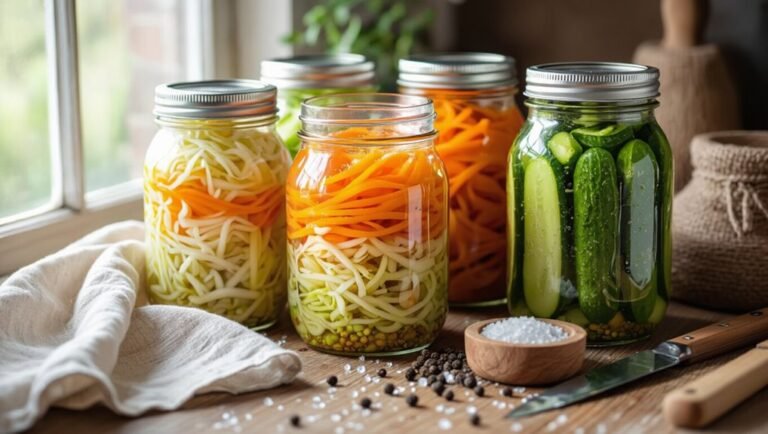
- Cucumbers (quick dill or bread-and-butter pickles)
- Carrots (vinegar-sweet or spiced slices)
- Red onions (thinly sliced for salads)
- Beets (bright, tangy slices)
- Peppers (pickled bell or banana peppers)
When you want probiotics, choose lacto-fermented labels instead of vinegar-brined jars.
Are Pickled Vegetables the Same as Fermented?
You might think that pickled and fermented vegetables are the same, but they differ in how they’re made and the microbes involved.
Fermentation relies on beneficial bacteria converting sugars into acid and other compounds, while many pickles are simply preserved in vinegar without that microbial action.
That said, you can use pickling methods to create true fermented vegetables when you rely on brine and natural bacteria instead of adding vinegar.
Distinguishing Between Fermented and Pickled Vegetables
You’ll spot clear differences when you look at examples side by side.
Cucumbers quickly brined in vinegar are pickled but not fermented.
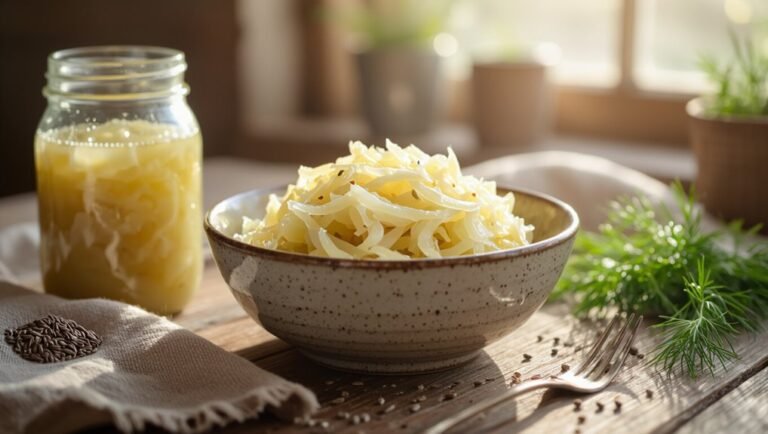
Conversely, traditional sauerkraut and kimchi are fermented by microbes and aren’t simply vinegar-pickled.
Let’s compare specific examples so you can tell which is which.
Examples of Pickled Vegetables That Are Not Fermented
While many people mix the terms up, pickled vegetables aren’t always fermented.
Some are simply preserved in vinegar, brine, or a quick pickling solution that stops microbial activity instead of encouraging it.
Examples of such pickled vegetables include cucumber refrigerator pickles, quick pickled red onions, pickled beets in vinegar, sweet bread-and-butter pickles, and quick pickled carrots.
You can enjoy these without fermentation.
Examples of Fermented Vegetables That Are Not Pickled
Some vegetables are transformed by microbes rather than by pouring vinegar over them, and that difference matters for flavor, texture, and health benefits.
You’ll find sauerkraut, kimchi, curtido, lacto-fermented pickles, and kvass vegetables made by salt-driven fermentation.
You’ll taste tang, complex umami, and lively bubbles, and you’ll receive probiotics and enzymes absent from vinegar-only preparations.
Can Pickling Be Used to Ferment Vegetables?
Curious whether pickling and fermentation are the same thing? You can use pickling to ferment vegetables, but not all pickles are fermented.
Fermentation relies on beneficial microbes converting sugars into acids or gases. Quick pickling uses vinegar to acidify immediately. Therefore, when you salt vegetables and let natural lactobacilli work, you’re fermenting and pickling simultaneously. If you dump vinegar over vegetables, you’re just pickling.
Consider these simple points to decide which method fits your taste and time:
- Fermented pickles develop probiotics
- Quick pickles are faster
- Salt brines encourage fermentation
- Vinegar halts microbial action
- Flavor evolves over weeks
The Health Benefits of Pickling vs. Fermentation
You’ll notice that fermentation often adds probiotics and enzymes that can support gut health and digestion.
Pickling in vinegar preserves foods and provides antioxidants and shelf-stable nutrients, but usually lacks live probiotic cultures.
Let’s compare the specific health benefits so you can choose what fits your diet.
Health Benefits of Fermented Foods
When you consume traditionally fermented vegetables such as kimchi or sauerkraut, you receive live probiotic bacteria that can enhance your gut microbiome.
Pickled vegetables made with vinegar typically don’t provide these same probiotics, which means they impact your gut in a different manner.
Understanding this distinction enables you to select foods that promote digestion and overall gut health.
Probiotics in Fermented Vegetables
Fermented vegetables can be a rich source of live probiotics, which are beneficial bacteria such as Lactobacillus that help to balance your gut microbiome, support digestion, and modulate immune function.
You’ll receive varied strains, vitamin boosts, and enzymes that aid in nutrient absorption. It’s essential to store them properly to keep cultures alive and enjoy small servings regularly.
- Improved nutrient uptake
- Diverse bacterial strains
- Natural enzyme support
- Simple storage tips
- Easy portioning
Gut Health and Fermented Foods
If you are consuming fermented vegetables for probiotics, it is worth comparing how those benefits stack up against pickled foods prepared without live cultures. You receive live microbes, potential improved digestion, and immune support from fermented foods; vinegar-pickles offer flavor and some nutrients but do not provide probiotics. Choose based on your goals: gut health, shelf life, or taste.
| Type | Benefits | Notes |
|---|---|---|
| Fermented | Probiotics, digestion | Live cultures |
| Vinegar-pickled | Flavor, shelf life | No live probiotics |
| Both | Nutrients, variety | Complementary choices |
Health Benefits of Pickled Foods
You’ll find that many pickled vegetables still pack antioxidants, so they can contribute to your daily intake of protective plant compounds.
You’ll also want to contemplate the role of vinegar, which can add acetic acid that may help blood sugar control and preserve nutrients.
Comparing these effects to fermentation helps you decide which method fits your health goals.
Antioxidants in Pickled Vegetables
Although pickling doesn’t create the same probiotic benefits as fermentation, it can still preserve and sometimes concentrate antioxidants in vegetables, so you’ll keep many of their disease-fighting compounds.
You can benefit from retained vitamins and polyphenols, though levels vary by vegetable and method.
- Color indicates antioxidant strength.
- Quick pickles keep more nutrients.
- Salt affects extraction.
- Heat reduces some compounds.
- Fresh produce matters.
The Role of Vinegar in Pickling
When you soak vegetables in vinegar brine, the acid both preserves them and shapes their flavor and nutrient profile.
Vinegar lowers pH to block spoilage microbes, extracts water-soluble compounds such as certain polyphenols and B vitamins into the brine, and can speed preservation without relying on live cultures.
Therefore, pickles offer different, but still useful, health effects compared with fermented foods.
You’ll obtain stabilized produce, altered nutrient bioavailability, and fewer probiotics.
When to Choose Pickling Over Fermentation and Vice Versa
You’ll choose brining or vinegar when you need speed, predictable flavors, and shelf-stable results.
Pickling fits that bill. Choose fermentation when you want probiotic benefits, complex tang, and evolving flavors that develop over days to weeks.
Below, I’ll compare common situations that make one method the better choice.
Situations Where Pickling is Preferred
If you want fast flavor and some short-term preservation, you’ll reach for quick pickling.
You can have crunchy, tangy vegetables ready in hours or a day without waiting for fermentation.
Choose quick pickling when speed and predictable taste matter, and reserve fermentation when you want probiotics and deeper complexity.
Quick Pickling for Flavor and Preservation
Because quick pickling uses vinegar and heat instead of waiting for microbes to work, it’s the go-to method when you want bright, consistent flavor quickly or need a reliable short-term preservative.
You’ll choose it when time, safety, or recipe clarity matters.
- You need flavor in hours
- You want to avoid fermentation risk
- You’ll preserve for weeks
- You can use delicate produce
- You should follow precise recipes
Situations Where Fermentation is Preferred
If you want long-term preservation using natural cultures, choose fermentation because the lactic acid bacteria create a stable, self-sustaining environment.
You’ll obtain complex flavors that develop over weeks or months while the microbes protect the food.
Keep in mind fermentation requires time, consistent conditions, and attention to hygiene.
Long-Term Preservation with Natural Cultures
Sometimes you’ll prefer fermentation over pickling when you want long-term preservation that also builds complex beneficial microbes and deeper broader flavors.
Fermentation’s live cultures keep foods stable for months to years under proper conditions, while pickling, especially quick vinegar pickles, prioritizes rapid acidification and a different taste profile.
You want probiotic benefits.
You plan multi-month storage.
You seek layered flavors.
You avoid strong vinegar taste.
You use traditional methods.
Common Myths About Pickling and Fermentation
You might’ve heard a few sweeping statements about pickling and fermentation that don’t hold up.
Not every pickled food is fermented, pickling isn’t always quicker, and fermented foods aren’t automatically healthier than pickled ones.
Let’s clear up those myths so you can choose the method that fits your goals.
Myth 1: All Pickled Foods Are Fermented
Although many people assume that pickling always means fermentation, that isn’t true. Pickling can be done with vinegar, brine that causes fermentation, or other acidic solutions, and each method produces different flavors, textures, and food safety outcomes.
You should know the difference so you can select the right approach for taste and safety. Vinegar pickles provide immediate tang, while fermented pickles develop probiotics and complex flavors.
Labels and recipes usually indicate which process is used, but if they do not, you should ask or check the brine ingredients. Consider your equipment, timing, and storage needs before choosing a method.
- Vinegar pickles provide immediate tang
- Fermented pickles provide probiotic benefits
- Check for live cultures on labels
- Safety: proper acidity matters
- Texture varies by method
Myth 2: Pickling is Always Faster Than Fermentation
Because pickling refers to multiple methods, it is wrong to assume it is always faster than fermentation. You will find quick vinegar brines that take minutes to prepare and flavor rapidly, and slow lacto-ferments that need days to weeks. The time depends on salt, temperature, vegetable thickness, and desired tang. Do not confuse instant pickles with fermented ones; they serve different purposes.
| Method | Time frame | Result |
|---|---|---|
| Quick vinegar | Minutes to hours | Crisp, tangy |
| Refrigerator ferment | Days | Mild complexity |
| Room-temperature lacto | Days to weeks | Deep sourness |
Myth 3: Fermented Foods Are Only Healthier Than Pickled Foods
Quick and slow pickles both have nutritional roles, but don’t assume fermented always wins on health.
You receive different benefits depending on method, ingredients, and handling. Fermentation can add probiotics, but not every ferment has live cultures at consumption.
Vinegar pickles preserve vitamins and add acidity that aids digestion. Choose based on needs, such as shelf life, sodium, sugar, and whether you want live microbes.
Consider taste, texture, and convenience as well.
- Fermented foods have potential live probiotics
- Vinegar pickles are stable with a long shelf life
- Sodium varies widely among different pickles
- Sugar is often used in brines
- Heat or pasteurization kills microbes
Conclusion
Now you know pickling and fermentation are not the same. Pickling uses vinegar or salt brine to preserve food, while fermentation relies on microbes to produce acids and probiotics. Pickled foods often lack live cultures, but they still offer flavor and antioxidants. Fermented foods support digestion and gut health. Choose pickling for quick, predictable results, and choose fermentation when you want probiotic benefits and complex flavors. Do not confuse the terms; both preserve food, but they do it differently.